






Trail Food meals are wonderfully simple.
Add hot water. Wait. Eat. Feel better about life.
But Trail Food products can also do more than rescue supper. They can become part of your camp kitchen, helping you add flavour, texture and interest without packing half a vegetable garden. You know when you dig into the kitchen box and find some soggy, rotting potatoes that stink to high heaven!
On a recent three-month trip through Botswana, Zimbabwe and Namibia, Trail Food founder Trish used Trail Food ingredients in a few simple but delicious ways: dried apple pieces in oats, dried vegetables kneaded into bread dough, and easy hummus lunches when cooking felt like too much effort.
This is the kind of camp cooking we love: practical, tasty and low on fuss.
Because nobody goes camping to spend 40 minutes finely dicing onions in a headwind.
Fresh ingredients are lovely, but they are not always practical on the road.
They need space, refrigeration and careful packing. They get squashed. They go off. They are forgotten at the bottom of the cooler box until they become less “farm fresh” and more “science project”.
Dried ingredients are far better behaved.
They are light, compact, easy to pack and useful when fresh supplies are limited. They are especially handy for camping, hiking, 4×4 trips, overlanding, bikepacking, paddling trips and self-catering travel.
In short: they add interest without adding admin.
One of the easiest camp breakfast upgrades is adding dried apple pieces to oats.
On Trish’s travels, dried apple was added to porridge with cinnamon and brown sugar. Simple, warm, comforting and delicious.
Cook your oats with dried apple, cinnamon, a pinch of salt and a little brown sugar or honey. Add powdered milk if you like a creamier porridge.
It is a small addition, but it turns breakfast from “fine, I suppose” into something you might actually look forward to.
Perfect for cold mornings, early starts and family camping trips where morale needs to be raised before anyone starts packing the tent.
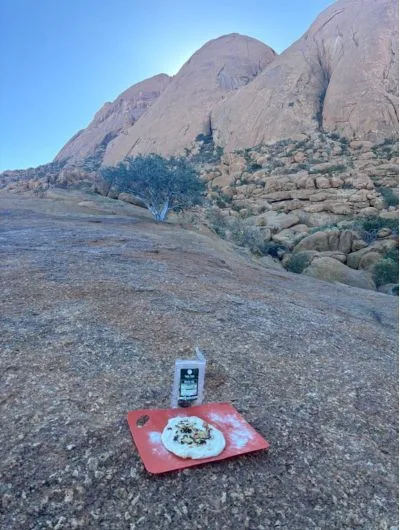
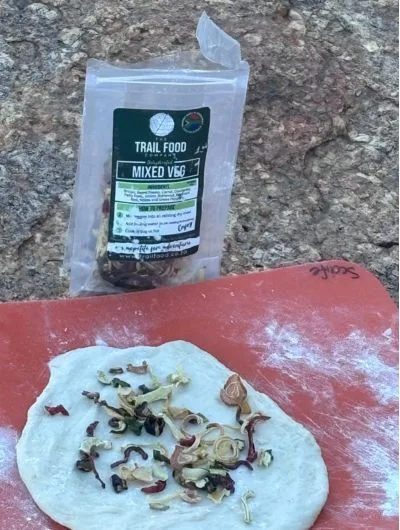
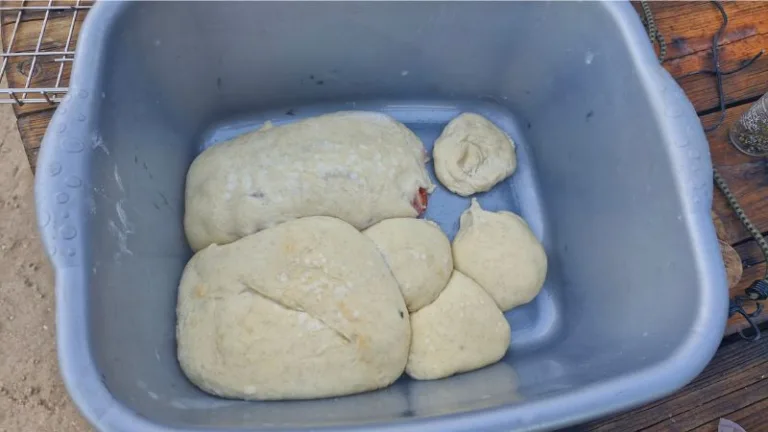
At Spitzkoppe, Trish made bread and kneaded dried vegetables into the dough to add flavour and texture. Sadly, there are no photos of the final product because she managed to burn the heck out of the bottom of the bread. Note to self: Some sort of proper pan to cook bread in is a good idea, a thin bottomed aluminium pot…not so much ☹ But once hacked out of said pot, the non-burnt bits tasted great! 😊
This is a brilliant overlanding or camp cooking idea because it turns basic bread into something more interesting without needing fresh vegetables.
You can add dried vegetables to bread dough, flatbreads, vetkoek dough, pot bread or savoury muffins. Knead them in dry, or rehydrate them slightly first if you want a softer texture.
Serve with butter, cheese, soup, stew, hummus or whatever else has survived the cooler box.
It is rustic, delicious and gives off a pleasing “I absolutely meant to do this” energy.


Trail Food hummus is one of those products that quietly saves the day.
Harriet and Mike discovered this in rural Zimbabwe after a long, hot, sandy day. They arrived in the dark, too tired and overheated to cook, and remembered they had a packet of Trail Food’s Creamy hummus and seeds. Less than a minute later, they had hummus with crackers and cold beers.
Their sense of humour — and marriage — survived.
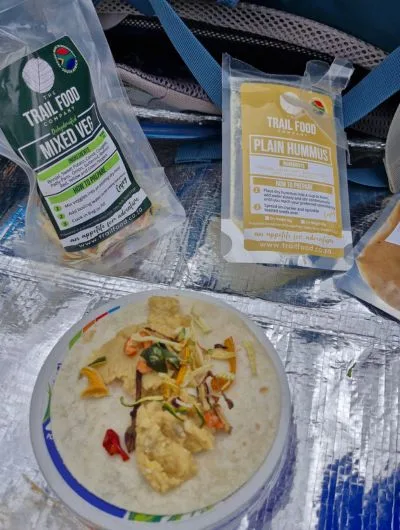
Hummus is useful because it makes a quick lunch, snack or light supper with almost no effort. Serve it with crackers, wraps, pita bread, fresh vegetables, biltong, cheese, olives or toasted camp bread.
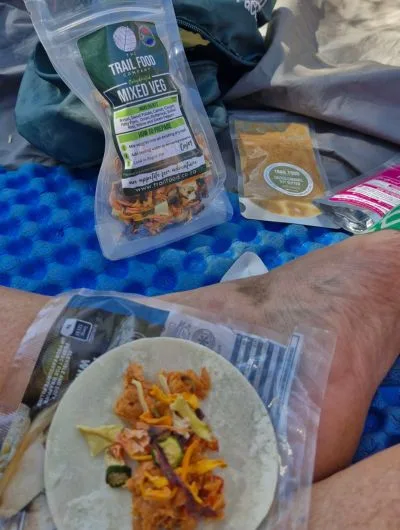
One super option is mini wraps, hummus and some of Trail Food’s dried veggies sprinkled on top!
It is ideal for travel days, hot weather, late arrivals and any moment when cooking sounds like a terrible idea.


Babaganoush works in the same way as hummus: quick, easy and surprisingly satisfying.
Pack crackers, wraps or flatbread, add a few extras, and you have a simple platter-style meal that works well for road trips, campsites, game drives and sundowner stops.
Add cheese, olives, cucumber, cherry tomatoes, biltong, hard-boiled eggs or camp bread if you have them.
It is not quite a restaurant platter, but it is close enough to make you feel smug. And smugness is an underrated camping emotion.
Dried vegetables are useful for boosting basic camp meals.
Add them to rice, couscous, pasta, instant noodles, soup, stew, omelettes or scrambled eggs. They add flavour, colour and texture without needing fresh vegetables.
This is especially helpful near the end of a trip when the fresh supplies are running low and the only vegetable left is one suspicious carrot rolling around in the bottom of the fridge.
For best results, add dried vegetables early enough that they have time to soften.
Nobody wants a crunchy onion surprise unless it was clearly part of the plan.
Trail Food meals can also be used as a base and then dressed up with extras.
Depending on the meal, add chilli, garlic, cheese, olive oil, fresh herbs, nuts, seeds, avocado, extra couscous, rice, pasta or a squeeze of lemon.
This is a great way to make meals go further or suit different tastes.
For family camping, you can prepare the base meal and let everyone add their own extras. This creates the illusion of choice, which is often useful when feeding children.
They are less likely to reject supper if they have personally sprinkled something on it with great ceremony.
Although not out camping Trish has used Trail Food’s bolognese topping to whip up a quick spag bol at home. Throw on some parmesan and everyone’s a winner!
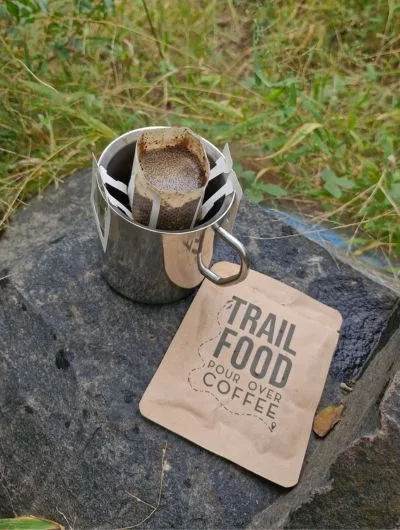
A good cup of coffee can turn a cold, stiff, dusty morning into something much more manageable.
Trail Food filter coffee is a useful addition to your camp pantry, hiking kit, overlanding box or emergency food stash.
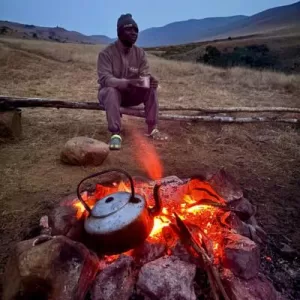
And, should the occasion call for it, a cheeky dash of Amarula turns it into what we like to call Ranger Coffee — which is basically camp coffee in its Sunday best. Or if you’re Joe from @sotallrightnow, it doesn’t have to be Amarula…
It is not just a drink.
It is a small act of civilisation.
Especially before anyone has packed up the tent.


A good camp pantry does not need to be complicated. A few versatile items can help you create breakfasts, lunches, snacks, quick suppers and emergency meals without carrying too much fresh food.
A useful Trail Food-inspired camp pantry could include dried apple pieces, dried vegetables, hummus, babaganoush, main meals, bulk meals, oats, couscous or rice, crackers or wraps, cinnamon, olive oil, chilli flakes, garlic and filter coffee.
With those basics, you can handle a surprising number of camp food situations.
Including the classic: “We have food, but somehow no meal.”
Trail Food meals are perfect when you need something quick and easy.
But the ingredients can also help you cook creatively on the road, at camp, on a 4×4 trip, during a hiking adventure or in a self-catering kitchen far from the shops.
Dried apple can rescue breakfast. Dried vegetables can make bread more interesting. Hummus can save lunch. Coffee can save everyone.
Creative camp cooking does not have to be fancy. It just needs to be practical, tasty and achievable when you are tired, dusty and possibly holding a torch in your teeth.
That is our kind of cooking.
A child who experiences the wilderness learns to appreciate and protect it. Your donation helps give a child their first adventure—one that builds confidence, connection, and a love for the wild that lasts a lifetime.