The Kruger Trail
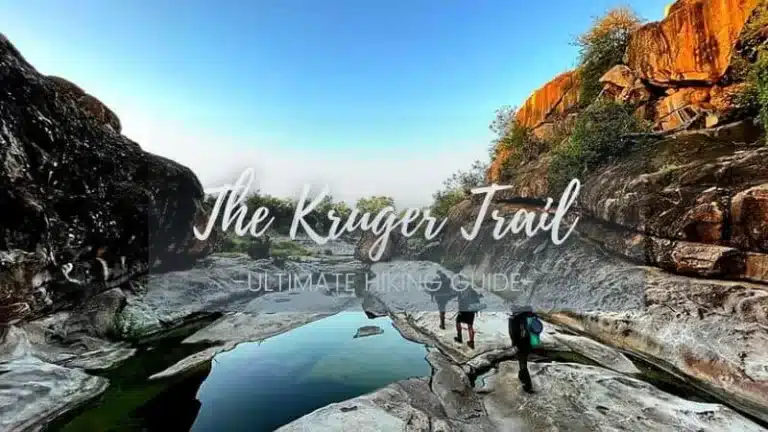
The Kruger Trail truly offers a once-in-a-lifetime experience in the heart of one of the most well-known wildlife parks in the world. You will get to explore parts of nearly two million hectares of diverse life forms and historically significant sights. You will also walk where no humans are likely to have walked before!
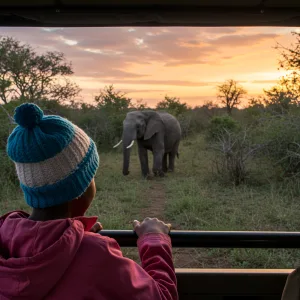
This wilderness trail takes you on the road less travelled – except maybe by elephants!
Here’s everything you need to know about the incredible Kruger Trail, including how hiking this trail can help save Flagship Species.
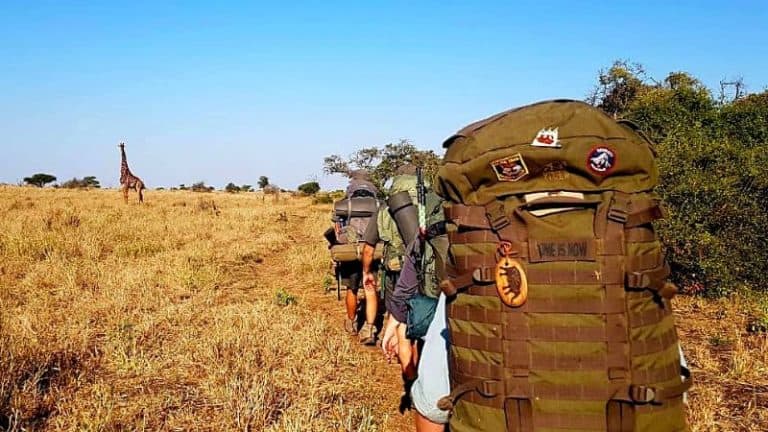
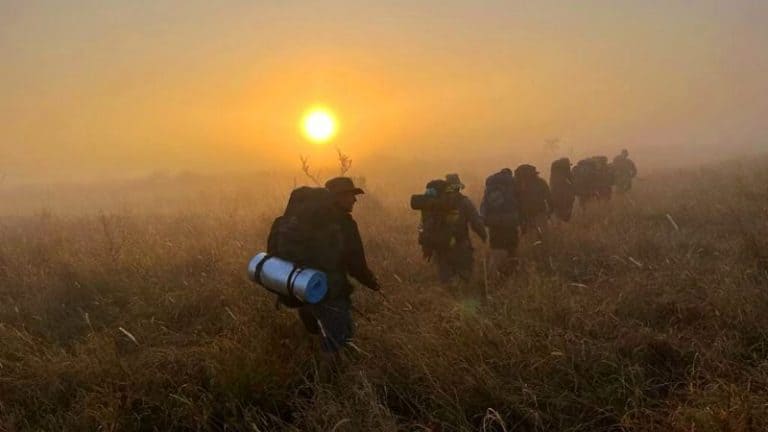
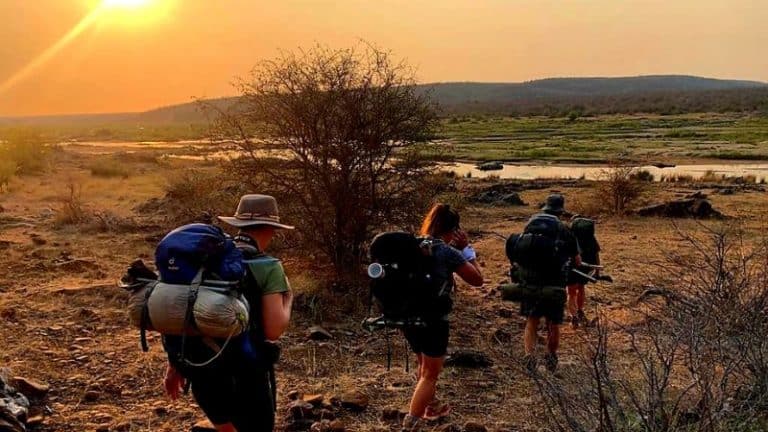

The Ultimate Guide to Hiking the Kruger Trail
WHY SHOULD YOU CHOOSE TO DO THE KRUGER TRAIL?
The Kruger National Park has a wonderfully high density of wildlife, meaning that your odds of spectacular sightings and encounters are higher. It is also home to the Big 5 and boasts diverse bird species and landscapes that include mountains, open plains, and savanna woodland.
At the core of The Kruger Trail is the unmatched experience of true wilderness. You can truly experience what is meant by the trail’s motto: “Wilderness cannot be conquered, it becomes part of you and enriches your soul.”
The trail is also really new! It only started in 2018, so the first groups have just started to complete their full Kruger Trail experience.
WHAT IS TRULY UNIQUE ABOUT THE KRUGER TRAIL
For starters, you can’t just choose to do this trail. The Kruger Trail is exclusive, and you need to buy the first Leg of the trail (Leg 1) at an annual auction.
The trail gets sold to a group of eight people, and no partial bookings or individual participants can get into this group. After completing Leg 1 of the trail, the group can continue with Leg 2.
You don’t have to bid to participate in the next legs (it only applies to Leg 1 to get started on the trail), but you will receive a roster with allocated dates for the subsequent legs.
The Kruger Trail has a set fee for each section between Leg 2 to Leg 6, and these are adjusted annually for inflation.
Should a spot open up within a group, the organisers will notify interested people who have placed their names on a list. You can get in touch with the organisers to get your name added to the list.
THINGS TO LOOK OUT FOR ON THE KRUGER TRAIL
There is so much, and always something, to see on this trail!
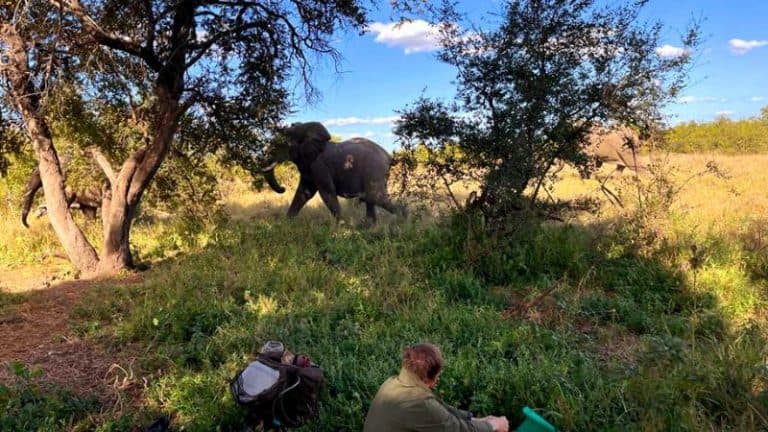
Being in a Big 5 area means that you have to be alert, but you’ll also get to marvel at the magic of being in the bush.
The organisers do not provide a set route to participants before the trail, so you never really know what you might see next!
WHEN TO HIKE THE KRUGER TRAIL
There aren’t specific recommended dates for The Kruger Trail since the dates get determined at the auction.
All dates are determined by The Kruger Trail’s coordinator, Louis Lemmer, but periods for the two annual legs are usually between the end of March and the beginning of September.
ABOUT THE KRUGER TRAIL
The Kruger Trail website mentions that part of the magic is the mere fact that you are in the wilderness. You will get to enjoy the silence, the smells of your surroundings, and feel how you fit into the world around you.
What is also unique about The Kruger Trail is that there is no set route – each leg, every year follows a new route!
The entire length of the full trail is approximately 650 kilometres. This distance gets divided into six legs, and each leg varies between 100km and 120km in total length.
Participants can expect to walk across rough terrain for about 15km to 25km per day.
You will also need to carry a, possibly heavy, backpack and walk long distances in extreme heat (although you likely won’t walk during the hottest time of day), and along difficult terrain.
There are no dedicated trails or markers, so the trail mostly consists of bushwalking and walking on animal trails.
The organisers recommend that participants go on a multiday backpacking route before embarking on The Kruger Trail since the trail is much tougher than regular backpacking trails in the Kruger National Park.
You won’t need any climbing skills since the route isn’t a technically challenging one.
The trail is challenging, so you will need to be fit and be a strong walker.
The minimum age is 16.
Those older than 65 need to present a doctor’s certificate to the lead guide to indicate that they can participate.
If you are fit and physically and mentally prepared for the trail, age shouldn’t be a deciding factor.
You will need to carry your own packs for the duration of the trail.
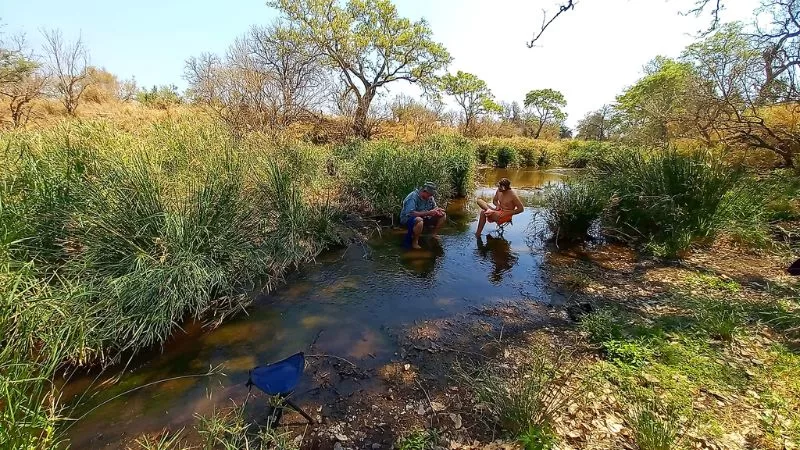
All water on The Kruger Trail comes from natural sources in the Kruger National Park, such as rivers, dams, and fountains. Since water can be limited in Kruger, it is a significant factor in the planning of the trail, and you’ll need to use whatever water you can get.
You should definitely take a lightweight, quality water filter (i.e. the Sawyer mini) and water purifying drops (not pills).
Participants should carry between four and five litres of water per day. Although the group usually sleeps at a water source, there will be days when you don’t come across any water during the day, so you’ll need to rely on what you have with you.
Should exceptional circumstances exist where there is no water available, the guides will arrange for a water drop.
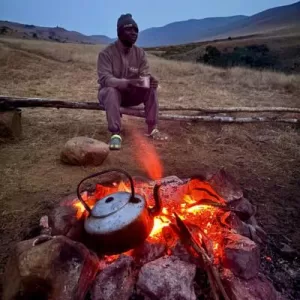
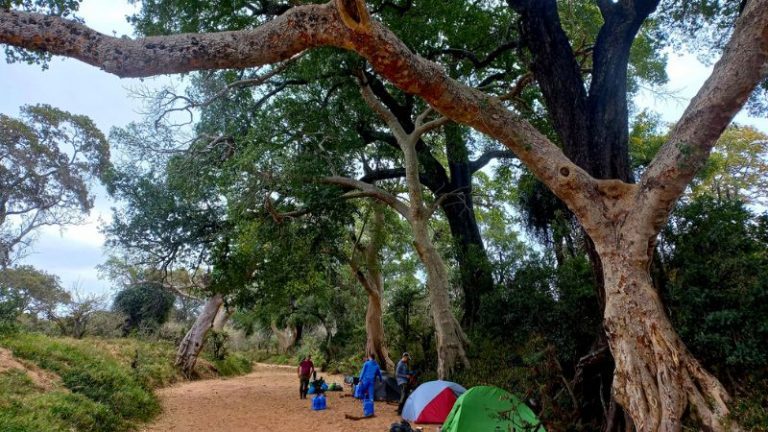
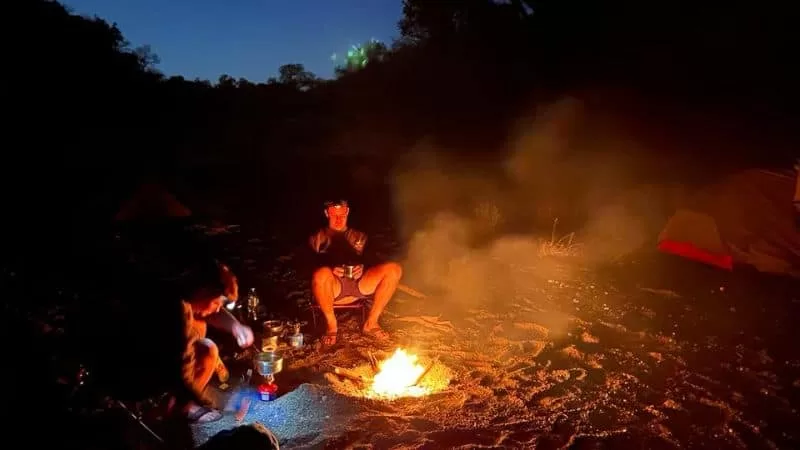
You’ll carry everything you need since the trail is unsupported. There are no ablution facilities or campsites, and you will sleep in the bush. Whenever you reach an area with enough water availability, you will be able to bathe (using bio-degradable soap) or swim.
When nature calls, you’ll have to dig a hole and burn the toilet paper to leave no trace in the natural environment.
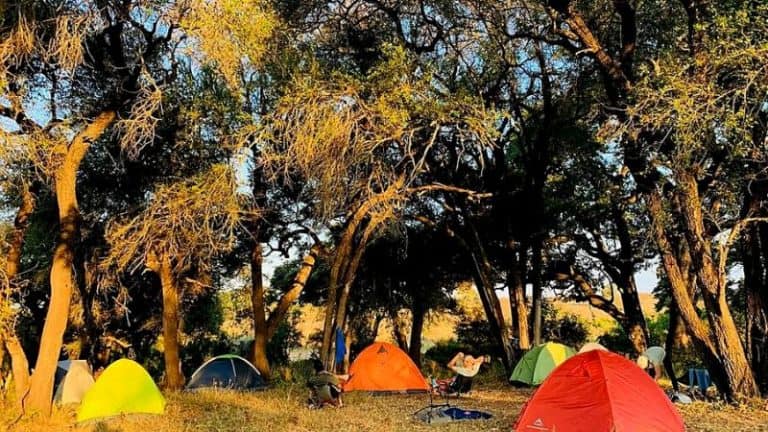
Each participant carries their own small tent. Tents are compulsory since they offer safety by protecting you from the elements and animals by creating a visual barrier.
All equipment and backpacks have to be stored in your tent at night. No one sleeps outside the tents, and nobody stands guard during the night (as you would typically find on a primitive trail).
Each group has two Trails Guides (who are Honorary Rangers) to lead them and to ensure the group’s safety.
SANParks’s Honorary Rangers is a not-for-profit organisation, so all profit that gets generated from The Kruger Trail goes towards conservation activities in South Africa’s national parks.
THE KRUGER TRAIL ROUTE
The trail starts at Crooks Corner on the Limpopo River in Northern Kruger. This is the border between South Africa, Mozambique, and Zimbabwe.
The route heads in a southerly direction (although you can spend days walking east or southeast), and ultimately ends at the Crocodile River in Southern Kruger.
This is one Ultimate Guide that specifically does NOT have a map! How cool is that?
How Each Kruger Trail Leg Works
There are six legs that take place over three years, so each leg continues where the last one ended.
Participants complete a maximum of two legs per year.
Every leg of the trail starts on a Sunday. On this day, participants meet their guides at the specified rest camp and stay overnight in the booked campsite. If you would rather spend the night in a comfy bed, you can book a chalet in the same rest camp at your own cost.
You will depart from camp on Monday morning before sunrise to start your trail. You can look forward to six days of walking through the bush and spending five nights in the heart of the Kruger National Park.
Participants complete the leg late on a Saturday afternoon and spend that last night in the predetermined rest camp. The next morning (Sunday), you are free to jump in your car for a day in the park or to go home once the gates open.
Participants will need transport to and from each camp, so try to make arrangements to have enough cars at the starting rest camp and at the rest camp where you finish.
Your lead guide will also help to coordinate these transport arrangements.
WHAT TO EXPECT FROM THE KRUGER TRAIL
It takes three years to complete the various legs of The Kruger Trail. (Is that not epic in itself!)
The entire trail is about 650km long, and each of the six different legs is about 100km to 120km.
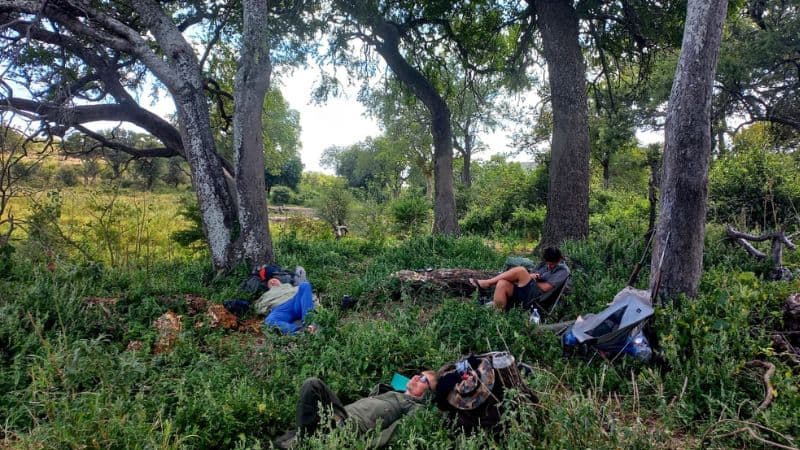
Each leg takes place over six days, and you’ll walk about 15km to 25km over rough terrain each day. Participants usually walk two of these legs per year.
COST TO HIKE THE KRUGER TRAIL
The cost of Leg 1 is not a set price since participants need to bid on it at an auction.
The auction happens annually in October, and you can register for the auction up to 1 week beforehand.
The current fee (as of 2024) for each leg between Leg 2 to Leg 6 is R66 000 per group of up to eight people.
Please note that an adjustment for inflation is made to this fee annually.
What Is Included?
The leg fee covers your participation in the trail and a campsite in a nearby Kruger National Park rest camp the night before (Sunday) and the night after (Saturday) your trail.
The Kruger Trail will also provide any safety equipment that might be necessary in the event of an emergency.
Hikers are responsible for the following
- Hiking food
- Transport
- Hiking equipment
- Daily Kruger National Park conservation fees (you can use your SANParks Wild Card)
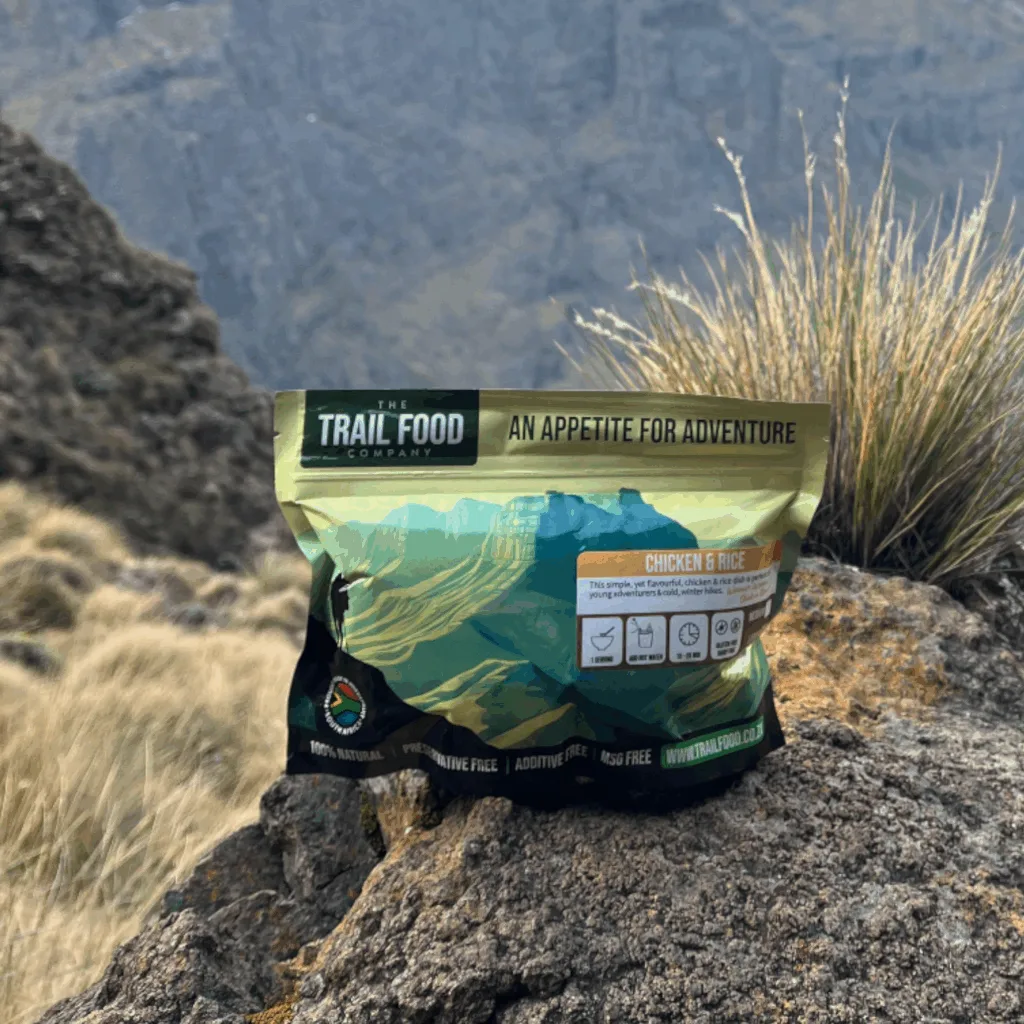
The Trail Food Co. can help with convenient, lightweight hiking meals.
International guests can also get in touch with The Trail Food Co to get more information on hiring hiking equipment from various places in South Africa as well as complete meal packs that cover breakfast, light lunches, dinners, snacks and drinks – all in one easy bag!
HOW CAN YOU GET TO DO THE KRUGER TRAIL?
The keyword here is “auction.”
There is an annual auction that typically takes place in October of each year.
You have to register for this and the registration fee is R20 000. You can send an email to auction@thekrugertrail.co.za to receive more information about the auction.
Each year 5 trail lots are auctioned, each of which allows 8 trailists to participate.
If your auction bid is successful, your R20 000 registration fee is non-refundable.
However if (tragically), you are unsuccessful in your bid, you will get a full refund of your deposit.
GETTING TO THE KRUGER TRAIL
First things first, you’ll need to get to the Kruger National Park!
Participants spend the night before each leg at one of the rest camps, and the camps differ for each leg of The Kruger Trail.
- Leg 1 – Punda Maria
- Leg 2 – Shingwedzi
- Leg 3 – Letaba
- Leg 4 – Satara
- Leg 5 – Satara
- Leg 6 – Lower Sabie
For those wanting to fly into the area, you could consider Eastgate Airport near Hoedspruit or Kruger Mpumalanga International Airport.
And if you would prefer to drive, the drive from Johannesburg takes about six hours.
WHAT TO PACK FOR THE KRUGER TRAIL
Are you having trouble deciding what to pack for The Kruger Trail? Check out our tried-and-tested backpack essentials!
HOW TO PACK FOR THE KRUGER TRAIL
You’ll want to ensure that your pack stays lightweight on this trail. Here’s how to pack your backpack for The Kruger Trail.
DON'T FORGET TO
Don’t fret about missing anything!
The organiser, Louis Lemmer, sends out a comprehensive list to all participants with valuable information about the trail.
FAQs
Do you still have questions about The Kruger Trail? Here’s what others have asked.
This trail is not without risk, as you’ll be in a Big 5 area on foot. (But that’s part of what makes it so awesome!)
However, two experienced Trails Guides accompany each group, and they are armed. Most importantly, participants need to follow the Guides’ instructions.
Kruger National Park rangers also offer support in the event of an emergency.
No, the organisers ensure that you will always have water every night and the next morning to fill up for the day on trail.
If there are no natural water sources, there will be a water drop.
Yes, you will need a tent that is big enough for you and your backpack since you need to store all your belongings in the tent at night.
If you are genuinely looking for an ‘under-the-stars’ experience then take a look at our Primitive Trails guide.
Mmmm, the short answer is “not really”.
But…should it happen that a spot becomes free within a group, the organisers will inform interested individuals.
You can contact the organisers on coordinator@thekrugertrail.co.za to get your name added to this list. Take note that the organisers are not in charge of these arrangements and that you will have to liaise with the group.
“Patience you must have, my young padawan.” We promise it will be worth it!
Yes.
Part of your leg fee covers a camping site in the appropriate rest camp for the night before and the night after your trail. However, you can book a chalet in the same rest camp at your own cost.
Keep in mind that your booking must be in the same base camp, as logistical arrangements carefully consider the travel time between camps to ensure a successful trail for the entire group.
FINAL THOUGHTS
This hike ticks all the boxes, and it gets us so excited! If you need any help compiling your meals or snacks for The Kruger Trail, take a look at our convenient and healthy options.
Our lightweight hiking meal packs are ideal for this trail, and you won’t have to worry about cleaning any dishes or carrying unnecessary weight in your backpack because all of the Trail Food Company’s meals come in ‘Cook-in’ bags!
Buckle up for the ultimate wilderness experience!
Are you one of the lucky ones who has been on The Kruger Trail? Please let us know all about your experience. We’d love to hear from you!
SUPPORT THE FLAGSHIP SPECIES PROJECT
Did you know that the Honorary Rangers (and all guides on The Kruger Trail are Honorary Rangers) have a special project that they raise funds for called the Flagship Species Project?
The Flagship Species project is dedicated to funding on-the-ground conservation activities in Kruger National Park. This includes snare removal activities, supporting alien invasive control programmes, providing equipment for elephant and vegetation research, funding rhino de-horning and supporting the KNP equestrian unit.
If you would like to contribute towards the Flagship Species Project, then use the discount code KrugerTrail when you order from the Trail Food Co and they will match the discounted amount and donate it to the Flagship Species Project.
The Trail Food Co would like to thank Vivian Butler for his help on this Ultimate Guide to The Kruger Trail.
We would also like to thank Vivian and the following Kruger Trail participants for allowing us to use their beautiful photographs: Tanel Tuuleveski, Kelly Rosslee and Willen van der Walt.
If you have an epic hike or trail to share, or if there are any corrections or updates that you would like to suggest to this trail guide, please email
FUEL FOR YOUR ADVENTURES
I'm ready to hike
All our hiking meals are healthy, lightweight, and convenient.
We’ve done all the planning so that you can simply hike!
Ultimate Hiking Guides


Adventure Insights
Featured Products
“Dehydrated Mixed Veggies” has been added to your basket. View basket
-
 Main Meals
North African Couscous with Lamb
R75.00 – R170.00Price range: R75.00 through R170.00 Select options This product has multiple variants. The options may be chosen on the product page -

-

-
 Main Meals
Penne Bolognese
R75.00 – R165.00Price range: R75.00 through R165.00 Select options This product has multiple variants. The options may be chosen on the product pageRated 4.78 out of 5