


There’s something different about hiking when your dog is by your side. It slows you down — not in pace, but in presence. The quiet glances, the shared breaks, the simple joy of being out in nature together — it’s a kind of companionship you don’t find anywhere else.
Trail Food touched base with Francois Janse van Vuuren – one of our hiking ambassadors, and asked him to tell us about hiking with dogs. Here’s what Francois had to say.
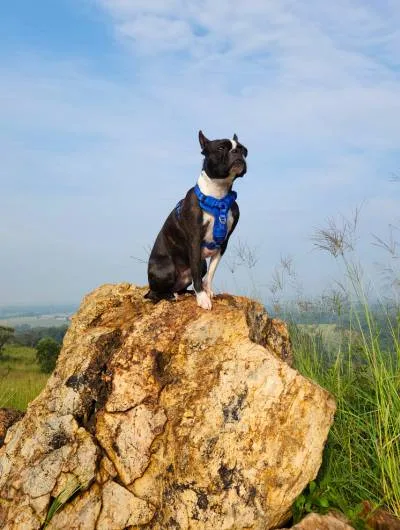
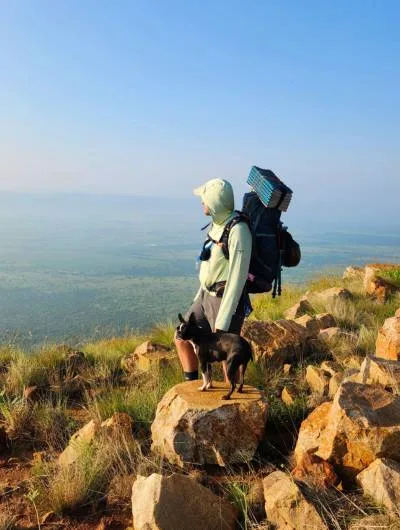
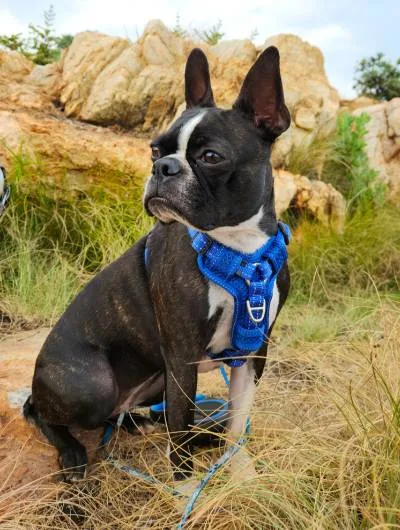
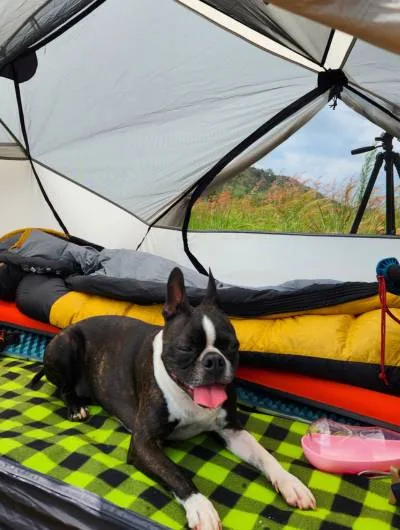
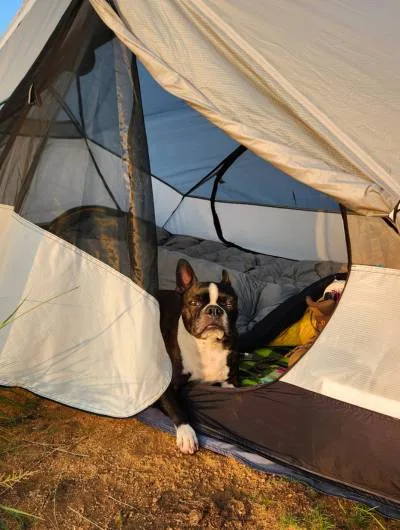
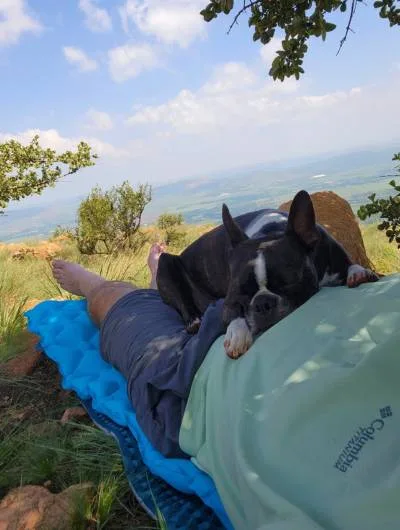
I’ve hiked many trails, but some of my most memorable ones have been with Sophia, my Boston Terrier. From short 6km loops to longer 18km days, and even overnight adventures in the Drakensberg, the bond we’ve built out there on the trail is something I wouldn’t trade for anything. But like all great adventures, hiking with dogs comes with responsibility — and a little preparation goes a long way.
Table of Contents
Start Small, Build Up
Just like humans, dogs need to build stamina and toughen up their paws. We started with shorter hikes to help Sophia adjust — both physically and mentally. Over time, she’s become confident on the trail, but I still keep a close eye on her signals. Dogs can’t tell you when they’ve had enough, so it’s up to us to notice when they’ve slowed down, started panting heavily, or moved into the shade for rest.
Obedience and trail manners matter too. Commands like leave it, wait, and stay close aren’t just convenient — they can be critical in keeping your dog safe from wildlife, cliffs, and other trail users!


Pack Light, But Pack Smart
When I hike with Sophia, I pack slightly differently. A few extra grams go into keeping her safe and comfortable, especially on longer or overnight hikes.
Here’s what I recommend for your dog’s day pack:
- Collapsible water bowl or a water-on-the-go bottle
- Outdoor harness and leash (retractable if safe to use)
- Dry and wet food mix, plus high-reward trail treats
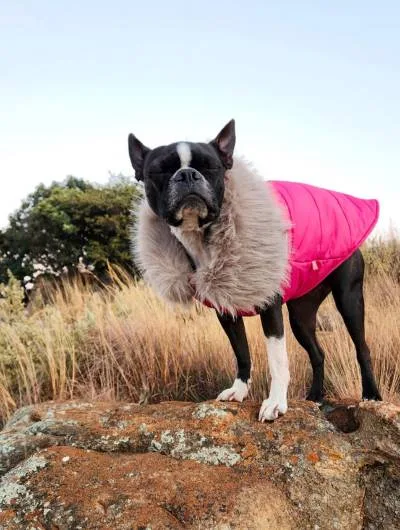
- Dog jacket and pajamas for winter hikes
- Picnic blanket or sleep mat for camp comfort
- Paw balm or ointment (I use Montego’s paw treatment)
- Emergency carry sling or backpack for small breeds
- Bone broth packets for hydration on warm days
Sophia sleeps inside my sleeping bag on cold nights — one of our favourite things about winter hiking. For bigger dogs, an old sleeping mat and blanket work well, or you can invest in a proper dog sleeping bag designed for the outdoors.
And of course, there’s one more essential item I now keep close — my Trail Food Company biltong. But let me warn you: Sophia has very specific taste.
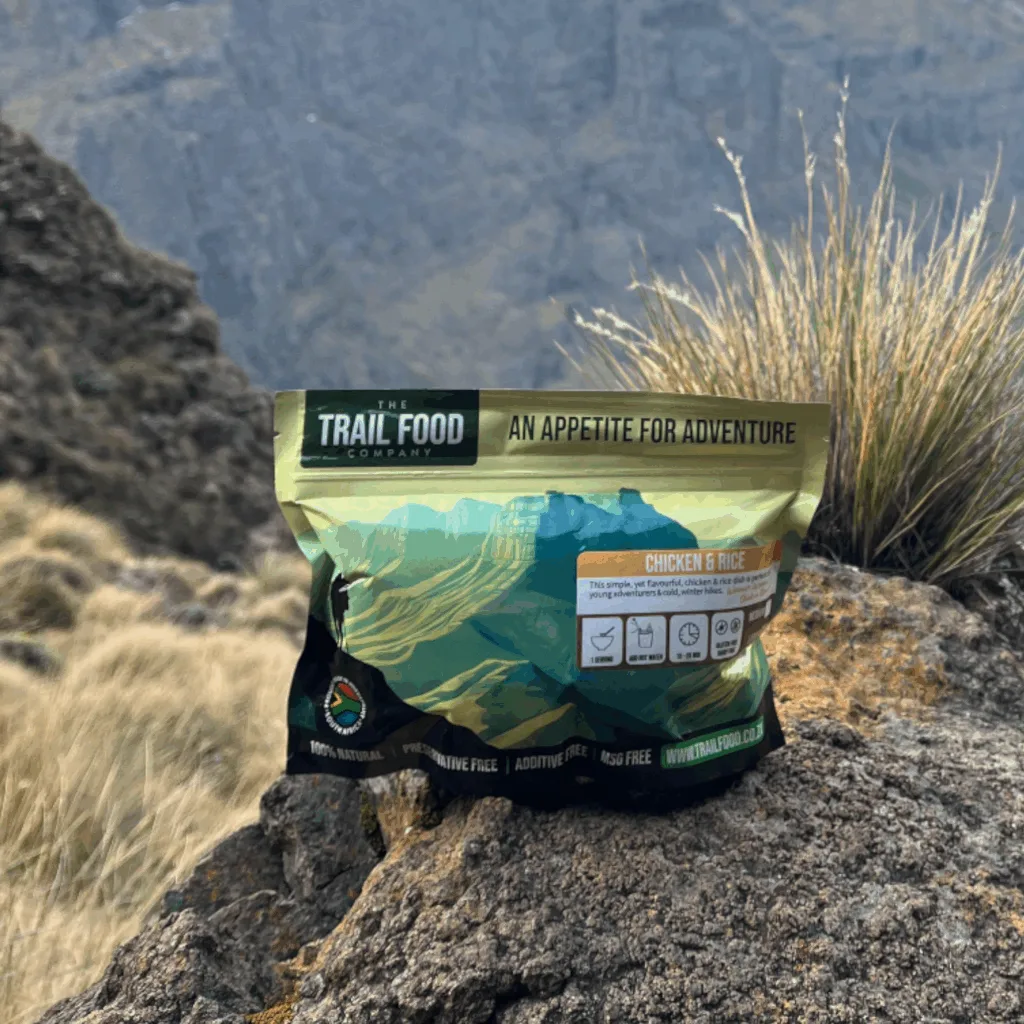
She’s been caught sneaking bites of my Fresh from the Hoed’s Venison biltong, and every time I open the Chicken & Rice or Beef Burrito Filling meals, she’s right there giving me the “Surely that’s for me?” look. Let’s just say… she knows what’s lekker.
Weather, Breeds, and Knowing Their Limits
Different dogs have different trail limits, and it’s important to know your dog’s breed and how they handle terrain and temperature. Boston Terriers, like Sophia, are brachycephalic, meaning they struggle with heat and humidity. We adjust by hiking early, often arranging early access with trail managers, and taking more frequent breaks. If she resists drinking, a dash of bone broth does the trick — it not only encourages her to hydrate but adds nutrients too.
When her tongue hangs low, or her breathing shifts, I know it’s time to slow down. And if she really can’t go on, I carry her out. It’s part of the responsibility. Listening to your dog is more important than reaching the summit.
And yes — we have full-on conversations on the trail. She responds with tail wags and side-eyes, and sometimes I truly wish she could say a few words back. Maybe “More snacks, please” would be her first.
Safety Isn’t Just for Humans
Hiking with your dog is fun, but it also means thinking a few steps ahead — especially in remote or mountainous areas. We practice evacuation drills, especially during winter months when dry grass and unpredictable weather can raise the risk of wildfires. Just like you would plan your own escape route, it’s crucial to have a plan for your dog.
This includes:
- Knowing the quickest descent points
- Having an emergency carry sling (especially for smaller dogs)
- Packing enough water and food for delays
- Checking weather alerts before every hike
- Being prepared for wild animal encounters, heavy rain, or stormy nights
Whether it’s a sudden cold front in the Drakensberg or a trail closure due to fire risk, your dog relies on you to make fast, safe decisions. Practicing what to do — calmly and quickly — helps you both stay ready, even if the unexpected never happens.


Trail Etiquette and Finding Dog-Friendly Routes
Always check in advance if the trail you’re heading to is dog-friendly. Many national parks and reserves don’t allow dogs due to conservation rules. However, there are plenty of private trails, conservancies, and nature estates that do. Look for local hikes near you that advertise pet-friendly access.
On the trail, follow good etiquette:
- Keep your dog on a leash unless it’s a quiet area where off-leash is safe and permitted.
- Always carry out your dog’s waste.
- Respect other hikers, especially those with dogs, children, or trail anxiety.
- Keep your dog clear of wildlife, livestock, and nesting areas.
Why It’s All Worth It
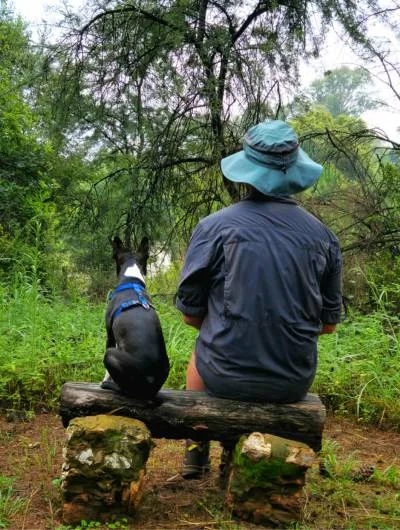
The trail becomes something else entirely when you walk it with your dog. It’s no longer just about the summit — it’s about the small things: muddy paws, a tail wag in the morning sun, the shared moment as you both sit and look out over a ridge.
Hiking with your dog teaches you to be present. To move slower. To celebrate every small discovery — whether it’s a stick, a shady patch of grass, or the last bite of biltong before bed.
Yes, there’s extra gear. Yes, there’s extra planning.
But the reward? It’s tenfold.
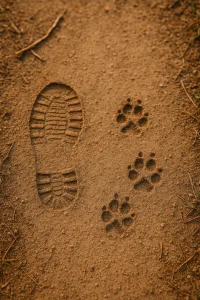
Because nothing beats walking beside your best friend — pawprints and bootprints, side by side.
Francois’ Top Dog-Friendly Trails
If you’re wondering where to start, these are Francois’ personal top picks — trails he keeps coming back to with Sophia:
B’sorah Adventures – A beautiful escape near Hartbeespoort, with forest paths and open spaces perfect for dogs.
Piesangkloof 4×4 Trails & Bush Camp – Great for rustic camping and hiking in a relaxed, dog-welcoming environment.
Mnweni Cultural Centre – Interestingly, this is the only place in the Drakensberg where you can do multi-day hikes with your dog.
A Word of Warning
Now, before you start mapping out a week-long hike with your pup, a quick editor’s note: I recently Googled “multi-day dog-friendly hikes in South Africa” and the top result that came up was a place I’d hiked myself — albeit with kids, not a dog. Curious, I called the owner to double-check and he replied, “Nope, definitely no dogs allowed!”
So please, always call ahead. It might seem obvious, but there’s nothing worse than planning an epic trip with your four-legged companion only to arrive and be turned away at the gate. The internet is a wonderful tool — but it’s not always right.
Thanks as always to Francois – and Sophia!