Primitive Trails
Do you want to experience an unrivalled connection with nature? Then you absolutely need to consider going on a primitive trail!
We’re so excited to share our knowledge about primitive trails with you and hope that you feel just as inspired as we do to go on one of these immersive experiences.
This ultimate guide to primitive trails covers everything you need to know about going on your first primitive trail, why it’s such a mind-blowing encounter plus some input from industry experts.
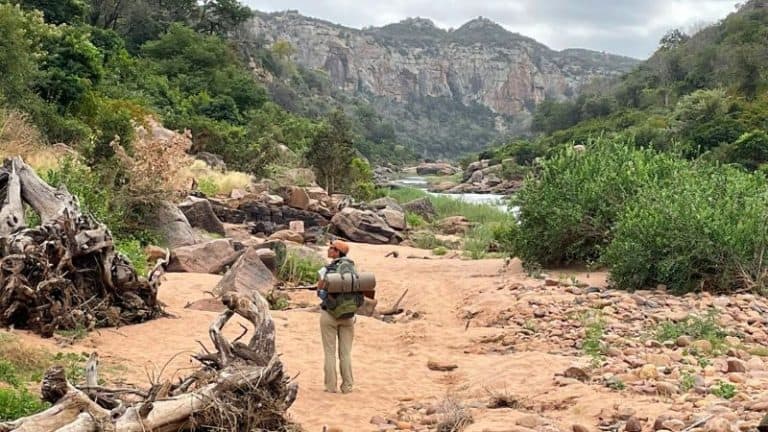
The Ultimate Guide to Primitive Trails
Why Should You Choose a Primitive Trail?
Do you sometimes feel as if you’d do anything to escape the rat race and that you just need to “disconnect” from the responsibilities and pressure of life? Let’s face it. Sometimes we just need time to think, to be, and to find what grounds us. And what’s better than doing this in nature?
In an age where digital burnout is real (particularly after the global pandemic), there’s nothing wrong with craving a digital detox. The Dean and Director of Henley Business School Africa, Jon Foster-Pedley, describes the benefits of a digital detox in an eloquent, profoundly simplified manner.
He makes it hard not to want to embark on one of these isolated adventures and explains the benefits of taking time to turn away from the “noise”:
- These timeouts give us time to think.
- A digital detox reminds us not to function in autopilot mode.
- The introspection might be uncomfortable, but it provides us with therapeutic opportunities to gain perspective on what matters and what doesn’t.
- Our minds require moments without sensory overload to create a space of calmness.
Foster-Pedley reminds us that “we have the power…it’s right here. It always has been.” We can decide to create experiences where we’re able to step away from that which overwhelms us.
And we can certainly turn towards the wilderness, where it stands, majestic in its simplicity, to remind ourselves of our interconnectedness with this world without having to be connected digitally. Essentially, a primitive trail is a back-to-basics encounter with undeniable benefits and where the sum of the experience is greater than its individual parts.
Spirited Adventures describes primitive trails so aptly, saying that their trails are not only once-in-a-lifetime adventures but that they are journeys that give us a greater understanding of ourselves and our place in the world.
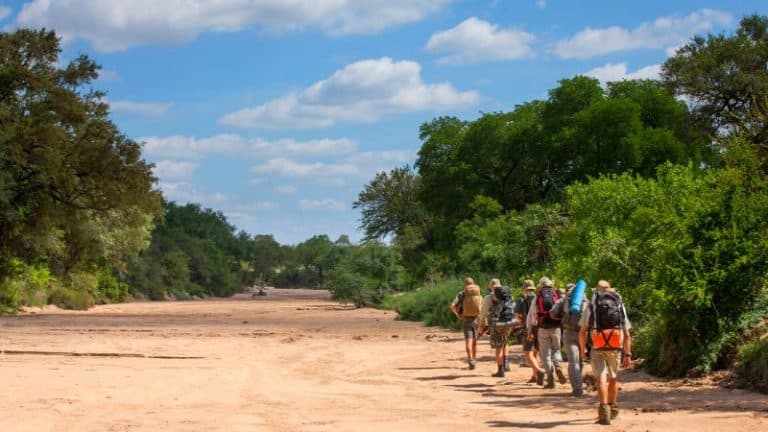
Who Would Enjoy Primitive Trails?
Primitive trails are excellent for many things including:
- A time to reflect
- An authentic wilderness experience
- Those seeking a safari experience on foot
- Those who just want to be outdoors
- And of course, those that love the bush, animals and birding
The unique experience of being in the wilderness is also a fantastic landscape for team building and facilitating change within individuals and organizations. One company that embraces the power of primitive trails is Novo, which specialises in transitions within teams.
We spoke to Novo CEO Graham Fehrsen about the company’s “Journeys” it offers in collaboration with Lowveld Trails. He typically uses a primitive trail or wilderness immersion with a small cohort of executives and entrepreneurs. He always aims to create groups of people from different worlds and combines the experience with one-to-one coaching and facilitated forums after the primitive trail.
Fehrsen adds, “The real gift of the primitive trail, as I am sure you know, is simplicity, no connection to modern technology and a calibration of time and perspective. Each participant in a Novo Journey has the opportunity to be intentional about their participation and within the cohort find support, perspective and encouragement. Brenden and Wayne (from Lowveld Trails) add hugely to this and are exceptional individually, but truly remarkable together.”
Things to Look out for on a Primitive Trail
Where to begin? The joy of primitive trails is finding something to enjoy in every moment. From looking at animal tracks to talking yourself through a hellishly hot day – it’s about how you learn and grow from the experience, and how you learn, share and embrace these experiences with your fellow trail mates.
These are some of the typical things you can look forward to on a primitive trail:
- Birds and animals of course.
- The small things in nature. Enjoying the space, the silence, and the experience of being in nature.
- The sunrises and sunsets.
- The stars like you’ve never seen them.
- The quiet contemplation that takes place on night watch.
- Sharing moments with friends, or strangers who become friends.
- Access to places that most others don’t get to visit and won’t ever get to see unless they’re also out on a primitive trail.
When To Hike a Primitive Trail
Most Primitive Trails are seasonal but roughly, these are the best times to go on a primitive trail:
Lowveld Area: April to November (when it’s cooler)
KwaZulu-Natal: Mid-March/April until mid-November (after the rainy season)
Kalahari: April & May
Botswana: Again typically April to November
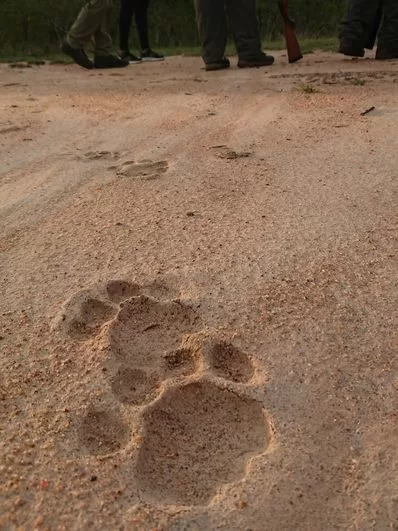
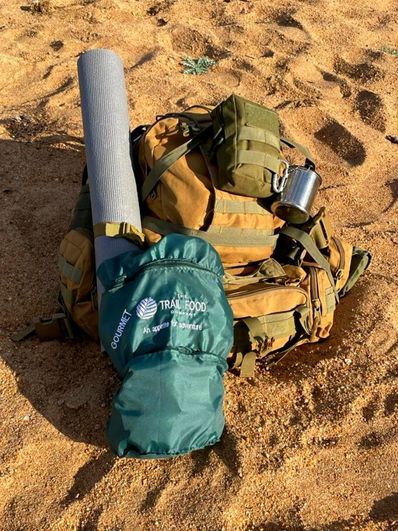
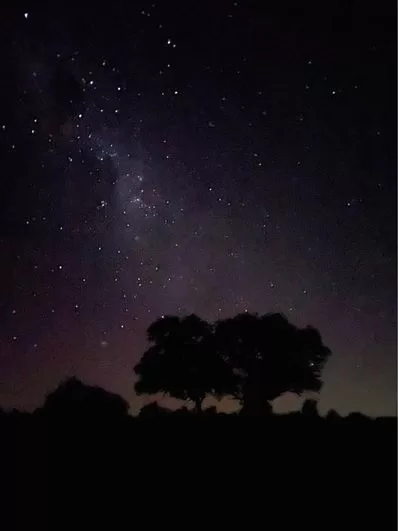
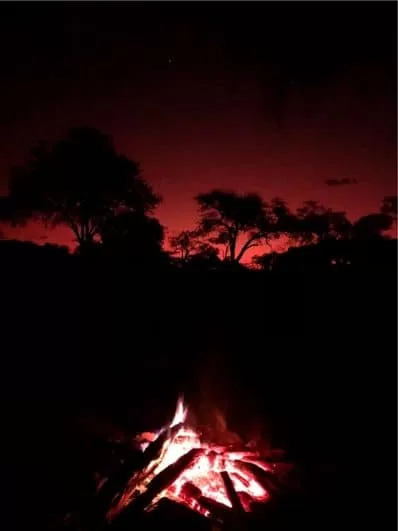
All About Primitive Trails
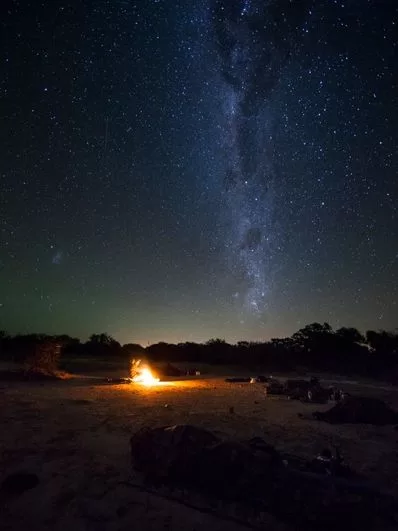
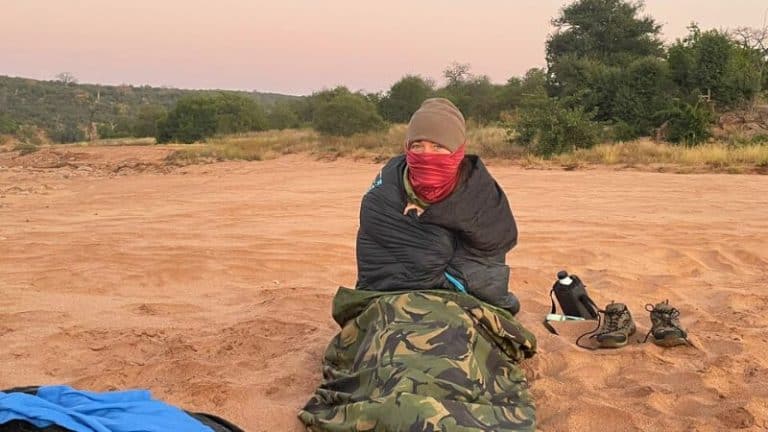
Something that will always stay with you after going on a primitive trail is the memory of sleeping under the stars. There are no tents, you are exposed to the elements, and you become part of nature.
African Bush Co.’s Massimo Rebuzzi describes primitive trails as “it’s not a 5-star experience, it’s a 10 000-star experience!”
Typically, you will carry everything you need. However, if there truly is water scarcity and no water can be dug up, water caching might sometimes be arranged.
There is also night watch on primitive trails, where everyone takes turns on a one-hour shift to be on the lookout for animals that might pose a risk. All cooking gets done on camping gas stoves, and guides typically only allow a very small fire at night to adhere to the no-trace policy.
A standard primitive trail is usually three nights and four days. However, you can arrange to have trails that last up to six nights, and Fraser Gear leads a fabulous new trail in Mozambique that is nine nights!
It all depends on whom you are going with and the group you are going with.
Your most significant considerations in determining the difficulty rating of a primitive trail depend on things like your backpack weight, the temperature (specifically heat), and access to water. It’s always best to check with your guides to discuss the terrain you will cover.
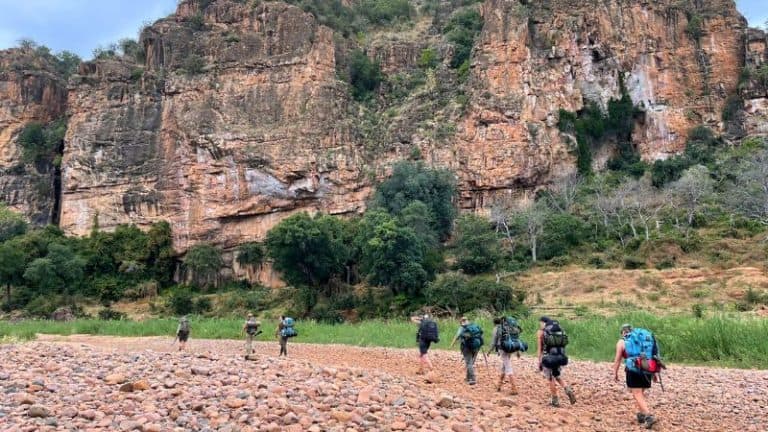
For example, Lowveld Trails’ Makuya Primitive Trail has some scrambling over large rocks and boulders along the Luvuvu river.
You need to be reasonably fit to enjoy your primitive trail. Although most of the trails in the Lowveld area are relatively flat, you will need to account for carrying your pack, walking in the heat, and having limited water.
Most companies typically have a minimum age limit of 12 and what might be referred to as an upper recommended age of between anything from 60 to 70.
That said, if you are up front and honest about your general physical well-being and can provide a letter from your doctor stating that you are in good health and capable of undertaking the trail, then depending on company and reserve policy their maximum age limit could potentially be waived.
Key health concerns to make your guides aware of might include any of the following:
- Heart condition
- Obesity
- Epilepsy
- Back issues
- Hypertension
- Knee issues
Maximum numbers for a group usually consist of eight participants and two guides. Typically, the group size cannot be less than six participants plus guides because of the need to cover the watch periods at night.
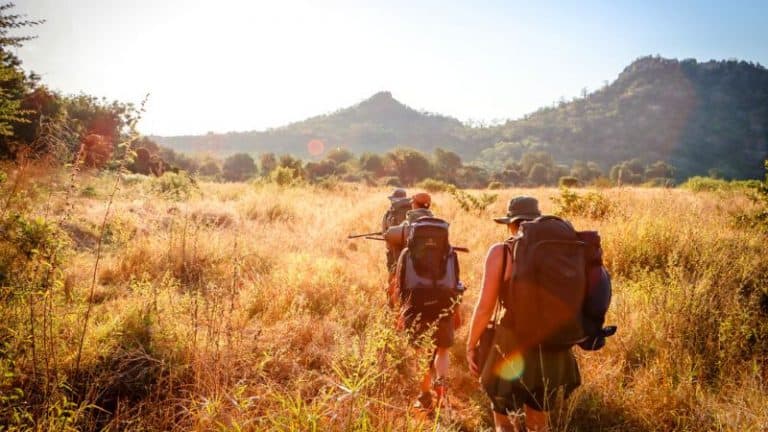
It’s self-carry (of everything).
Nature! Your accommodation is right under the stars, on the ground, and as close as you can get to all the sounds of the outdoors. Try to include a bivy bag in your pack (some trail companies will provide these), as these really help to keep the moisture and dew off you and your sleeping bag.
Water is one of the most significant limiting factors on a trail. If you run out of water or if something goes wrong with your water container, you risk becoming a liability to yourself and the rest of your group.
We recommend that you carry between 2ℓ-3ℓ of water. However, this amount depends on the time of year and the location of your trail, as those determine both the temperature and whether you might have access to rivers.
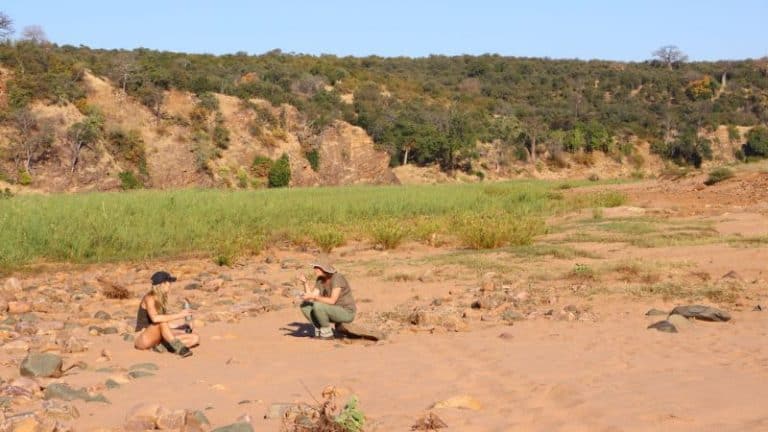
Depending on the trail, location, and the time of year, you might be able to get water from the river, dig for water in a river bed, or you might need to rely on water caches. You may not necessarily always have to carry 3ℓ of water all the time. Preferably carry your water in more than one container (it’s always good to have a backup).
Trails Guide Brenden Pienaar from Lowveld Trails spoke to us about using hydration packs (bladders) on primitive trails. He says, “I’ve seen them fail too many times. Punctures, pops, leaks, valve failure, mouthpiece failure, etc, etc. The simpler the container, the less can go wrong. This is my personal opinion though.”
So, although a bladder might be a super convenient option, it could become a disaster if you’re suddenly left without water and a drenched sleeping bag.
Our advice is to definitely take one or the other if not both – it’s always better to be safe than sorry. We prefer a water filter and have an MSR TrailShot Pocket-Sized Water Filter.
Lutz Otto from Spirited Adventures suggests using products without a chlorine base and taste testing them before trail. His recommended product is Aqua Salveo.
If you don’t like the taste of the water on the trail, sachets of electrolyte drinks or drinks like Game are often helpful in disguising the taste of water.
Collapsible buckets or portable showers are great for collecting and storing water from the source while at camp – especially for washing up, brushing your teeth, and having water at night. Although, if you use the Trail Food Co.’s fabulous cook-in bags, you won’t need to wash up any pots (just saying)!
Zip. Zero. Nada. And that’s the beauty of it! The aim is to experience nature and to leave it undisturbed.
Each trail group will carry a small spade to dig holes to get rid of bodily waste.
Toilet paper typically gets burned after use.
Participants will need to complete indemnity forms. Most trails companies will have a range of insurances and policies with SATIB, which includes comprehensive Public Liability cover and a Medivac plan. This insurance also covers international guests. The companies also usually have satellite phones or two-way radios for emergency communication.
Different Options for Primitive Trails
This list of primitive trail options is certainly not exhaustive – and we’re sure there are others that we didn’t mention here. However, these are the primitive trails we’ve been on or heard of. Every trail below is unique, so we suggest that you get in touch with the trail provider for specific details.
African Bush Co.
- Botswana
- Lowveld
- KwaZulu-Natal
African Born Safaris
- Pafuri
Colin Patrick Training
- Get in touch with Colin Patrick to find out more about his primitive trail options.
Ezemvelo KZN Wildlife
- iMfolozi Wilderness Trails – Hluluwe-iMfolozi Park
Fraser Gear
- Niassa Reserve in Northern Mozambique (once per year)
Lowveld Trails
- Timbavati
- Makuya
- Kalahari
Shangani Trails
- Makuleke Concession in Pafuri (Northern Kruger National Park)
Spirited Adventures
- Klaserie
- Letaba Ranch Nature Reserve
- Timbavati
Tchagra Trails
- Balule
- Klaserie
The Ubonani Expedition
- Makalali
Costs for Primitive Trails
The cost to go on a primitive trail varies depending on the location, duration, and experience. You can expect to pay anywhere between R4 000 per person for a 3-night trail to R20 000 per person for a 9-day trail in Northern Mozambique.
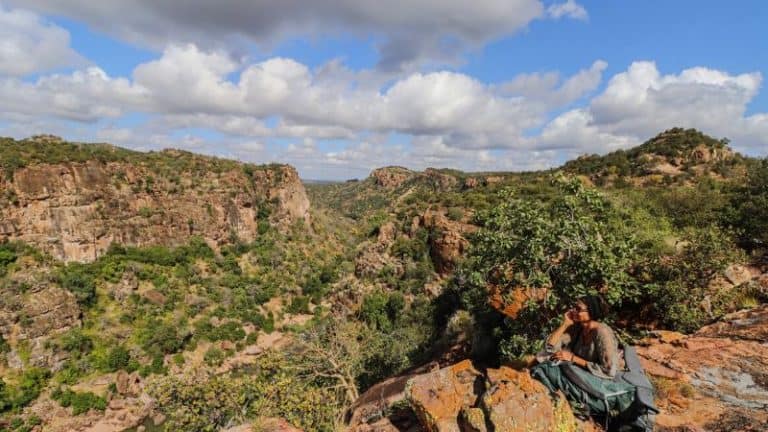
What To Pack for a Primitive Trail
Check out our super handy tips on what to pack for your next trail!
How To Pack for a Primitive Trail
If you’re unsure how to pack your backpack, take a look at our tips!
FAQs
Do you still have some lingering questions? Here are some of the most common questions others ask about primitive trails.
People’s questions usually relate to their apprehensions since they’re preparing to step out of their comfort zones. Most questions are trivial and focus on clothing, water, equipment, food, snakes, and scorpions on the trail.
No, there are no porters or slackpacking options on primitive trails.
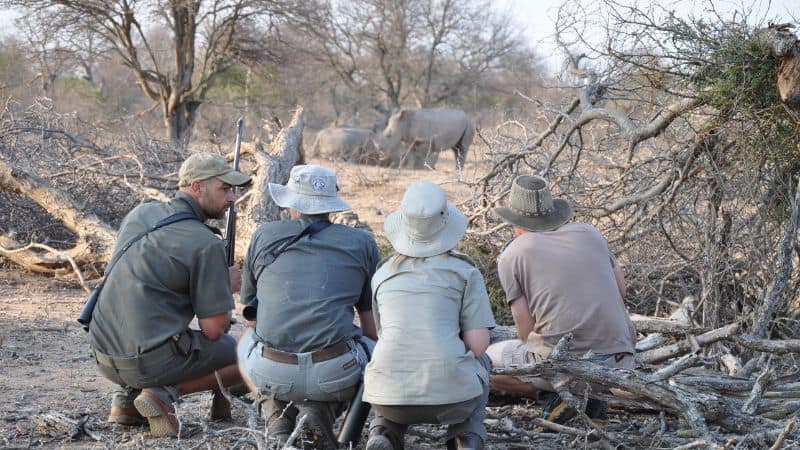
There are, of course, risks associated with primitive trails. However, if you are with a qualified and experienced guide, then although you can never say that it is categorically not dangerous, the skill, training and experience of your guides will go a long way to mitigating these dangers.
This is a key factor as to why it takes so long to become a qualified trails guide – they need to know what they are doing, how to assess situations, understand animal behaviour, and learn how to handle a rifle.
It’s also why people need to do night watch on a primitive trail. Listen to your guide. Be sensible. And embrace and enjoy the experience!
The distances covered on a primitive trail depend on the group’s fitness, the time of year (the temperature), and the terrain that is being covered.
It can get extremely cold on a primitive trail, particularly in winter. It’s essential that you have a quality sleeping bag, a ground sheet, and layers of suitable clothing.
Depending on where and when you hike, rain is not as often an issue as you might think. But, since you never know, two essentials you should have with you are a bivy bag and a poncho. You can also take a ground sheet to turn it into a cover if necessary.
Typically, you won’t want to go on trails over the peak rainy season – which is malaria season. You can, however, carry and string up a mosquito net.
Final Thoughts
We told you that primitive trails are everything and more! We hope that you can see the benefits that lie in wait – and that most, if not all your concerns about going on a primitive trail have been put at ease. You won’t check in at a luxury lodge, but you will return feeling refreshed, reset, and more connected with the world around you.
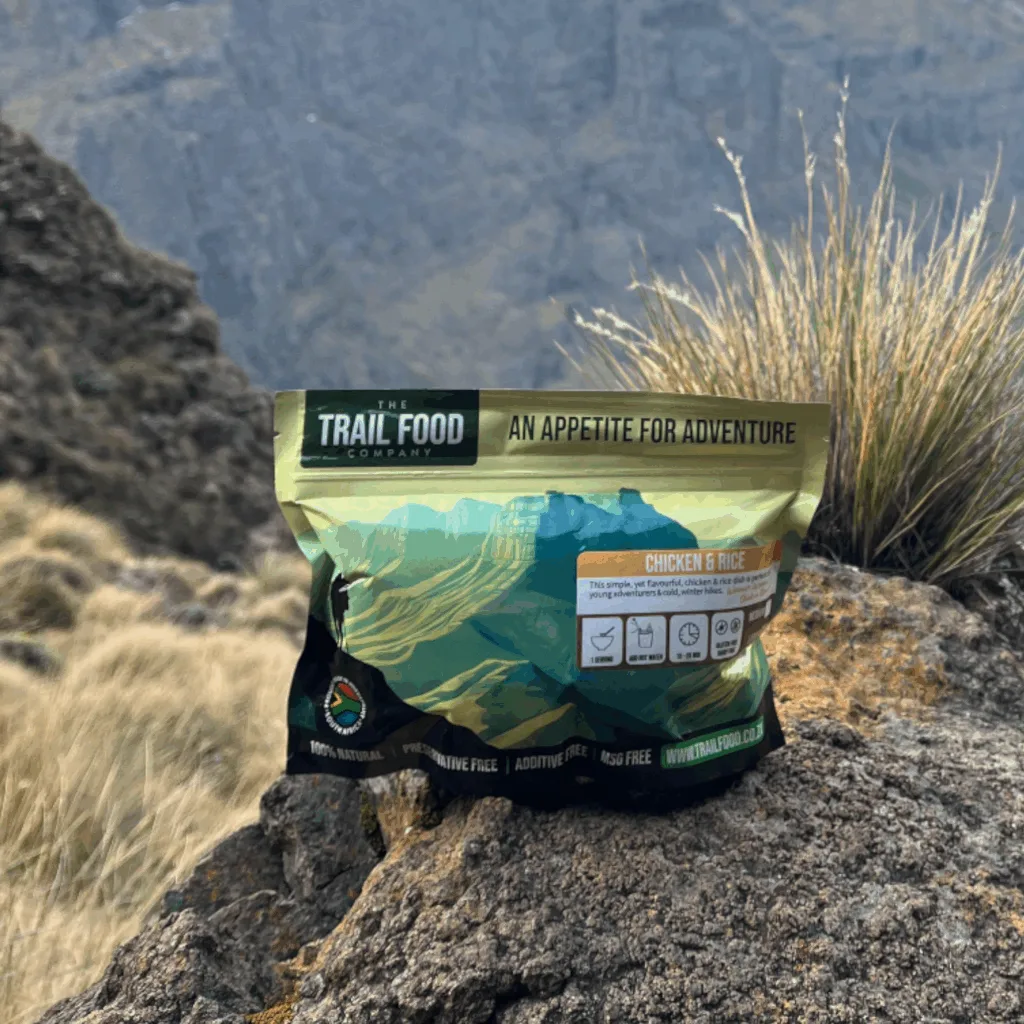
If you’d like ideas for lightweight, super convenient primitive trail hiking meals, check out our wide selection of Multi-Day Packs. These will cover all your meals and snacks from breakfast to dinner with zero fuss.
Have You Completed a Primitive Trail
Have you been on a primitive trail? Are you planning to go on one soon?
Let us know about your experience or what you’re looking forward to – we love to hear from you!
A big thank you to Di Tipping-Wood, Lowveld Trails, Macs Toich and Colin Scaife for photographs, plus of course all the beautiful Makuya ladies!
If you have an epic hike or trail to share, or if there are any corrections or updates that you would like to suggest to this trail guide, please email
FUEL FOR YOUR ADVENTURES
I'm ready to hike
All our hiking meals are healthy, lightweight, and convenient.
We’ve done all the planning so that you can simply hike!
Ultimate Hiking Guides


Adventure Insights
Featured Products
“Fuel an Adventure” has been added to your basket. View basket
-
 Main Meals
North African Couscous with Lamb
R75.00 – R170.00Price range: R75.00 through R170.00 Select options This product has multiple variants. The options may be chosen on the product page -

-

-
 Main Meals
Penne Bolognese
R75.00 – R165.00Price range: R75.00 through R165.00 Select options This product has multiple variants. The options may be chosen on the product pageRated 4.78 out of 5