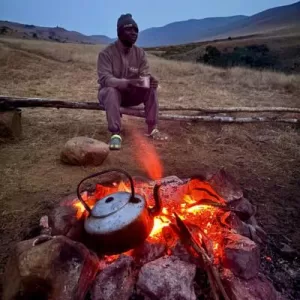

Rim of Africa

This traverse explores a mountain passage in the heart of the Cape Floristic Region, one of only six floral kingdoms in the world. Hikers who embark on Rim of Africa will move through a series of linked mountain traverses. While some of these traverses offer path-hiking, hikers can expect to go off-path on the mountainous terrain, which requires technical skills.
Hikers need to carry everything in their backpacks, including hiking meals . Our lightweight, nutritious trail food will give you the necessary nutrition and energy you’ll require on this epic traverse. If you’d like a selection of meals, snacks, and drinks for your Rim of Africa traverse, have a look at our convenient Trail Food Co. Packs .
There are so many things that make Rim of Africa unique, so without further ado, here’s everything you need to know about this epic hike.

The Ultimate Guide to Hiking Rim of Africa
Why Should You Choose Rim of Africa Hike?
Do you crave an adventure unlike any other where you can tackle one of South Africa’s most elite hikes that’s not for the faint of heart? Then Rim of Africa that explores the Cape fold mountains in the Western Cape should definitely be on your bucket list!
This hike is the longest mountain traverse in South Africa, and hikers can look forward to exploring beautiful mountains and diverse flora along the way. It’s also South Africa’s first Friendship Trail, making it part of international trail organisations to garner support and raise awareness for public footpaths.
Rim of Africa’s non-profit mission is to conserve and protect the ecosystem of the mountains. It also aims to broaden accessibility to the experience through sponsored places and youth wilderness initiatives.
There are strict guidelines for hikers to follow to help conserve the environment, such as no fires, except at permitted overnight camps that have established fireplaces. Hikers must carry out all trash, which includes any food packaging and used toilet paper.
The organisers emphasise a strict policy against using soap close to any running streams to prevent water contamination (that includes biodegradable products). In previous years, hikers have been encouraged against wearing watches or carrying cellphones to allow hikers to fully immerse themselves in the experience.
If you want to face and overcome physical and mental challenges, Rim of Africa will humble and reward you in abundance.

When To Hike Rim of Africa
Rim of Africa takes place during spring in South Africa when weather conditions allow for safe hiking through the rugged mountains.
This roughly equates to late September through to late November.
There are set dates each year so make sure to check availability and get planning!
About Rim of Africa Traverse
There’s a lot to digest about Rim of Africa. Here is some of the basic information about what to expect on this unforgettable traverse.
The full Rim of Africa traverse is approximately 760 km.
Rim of Africa covers the Cape Fold mountains. Each of the 9 different traverses varies between 7-10 days.
Tough, mountainous conditions.
Hikers need to be very fit for all 9 of the traverses.
12 people per traverse.
Hikers older than 65 have to supply a medical certificate from their doctor to indicate that they are fit and healthy enough for the challenges of this endurance trail.
Hikers carry their own backpacks with all gear and hiking food they might need on the traverse. There is a food drop at the start of every traverse, and also in the middle of every traverse.
You should pack a lightweight tent and sleeping bag. The organisers also have MSR tents available to rent on a first-come, first-serve basis.
Hikers should always carry a minimum of 2ℓ of water per day unless advised differently. Your mountain guides will show you where to fill up your water bottles along the route. Although the water is safe and delicious to drink, it is advisable to use purification tablets or drops if you have any concerns.
- Logistics support which includes 1 food drop per traverse.
- Guides (2 per group of max. 12 hikers).
- GPS, maps and satellite phone (carried by guides).
- Indemnity insurance for any damage inadvertently caused to private property.
- Rim of Africa buff.
- Permits and conservation fees.
- Overnight camping and permit fees.
- Emergency first aid kit (carried by guides).
Two qualified, experienced mountain guides accompany each group on a traverse. The guides will assess the situation and respond accordingly if an emergency arises. Your guides carry an emergency satellite phone, a medical emergency pack, and a GPS.
Should someone need to contact you in case of an emergency, you can phone +27 23 614 1895.
- Cederberg Traverse: Clanwilliam Hospital
- Kouebokkeveld Traverse: Citrusdal Hospital
- Skurweberge Traverse: Netcare Ceres Hospital
- Hex River Traverse: Worcester Provincial Hospital
- Langeberg Traverse: Robertson Provincial Hospital
- Marloth Traverse: Swellendam Hospital
- Grootvadersbosch Traverse: Swellendam Hospital
- Gouritz Traverse: Riversdale Hospital
- Outeniqua Traverse: Mosselbay Hospital


Rim of Africa Traverse
You can combine all nine of the Rim of Africa traverses, which is referred to as the Thru-Hike.
Should you sign up for all of traverses, your hike will last approximately 61 days, and you can expect to cover about 760km in total.
Should this seem a bit too adventurous, you can also decide to do only one of the routes or to combine several of them.
Here are the highlights of each of the nine Rim of Africa traverses.
Duration: +- 8 days
Distance: Roughly 90km
Hiking Grade: Fairly strenuous
Hikers start on this easier traverse from Pakhuis to the Middelberg Pass. You’ll follow the trail and enjoy breathtaking views along the route, and come across rock formations, rock pools, and vistas in the wilderness of the classic Cederberg traverse.
The terrain is mountainous, and you can expect some steep gradients and a bit of off-trail hiking.
Duration: +- 7 days
Distance: Roughly 60km
Hiking Grade: Strenuous
This section is one of the highlights of the Rim of Africa, and hikers enter private land to ascend incredible mountain peaks. You can look forward to secret valleys, rock formations, and being enveloped by towering peaks.
This traverse is off-path and technical, with some steep gradients and peak ascents. Expect a challenging climb with a kind descent into camp on the final day.
Duration: +- 7 days
Distance: Roughly 76km
Hiking Grade: Strenuous
Although this traverse over the Skurweberge is strenuous, you’ll be in awe of the splendour when you cross the watershed line between the Atlantic and the Indian Ocean. Hikers can also look forward to breathtaking rock pools on the first day of the traverse.
Get ready for a beautiful mix of ridgeline tracks and off-trail hiking from Witzenberg South to Ceres. Hikers will occasionally cross farmlands and enjoy walking through pine forests (an excellent opportunity to cool down).
Duration: +-8 days
Distance: Roughly 92km
Hiking Grade: Strenuous
Hikers will reach the highest point along the Rim of Africa during this traverse, at an altitude of almost 2000m. Expect majestic rock amphitheatres and abundant Fynbos, along with remarkable views and an ascent into beautiful rock pools of the Klein Karoo.
This section includes off-path hiking and a rocky descent where you’ll require technical skills to get into the Hex River Valley.
Duration: +- 7 days
Distance: Roughly 75km
Hiking Grade: Strenuous
This ridgeline hike takes adventurers from the Koo Valley (where South African food producer, KOO, grows fruit) to Montagu. You’ll feel as if you’re on top of the world and walking through the sky while enjoying views over the Indian Ocean on clear days.
Expect a bit of scrambling through Fynbos and hiking along rocky ridges throughout this traverse. There are some steep gradients, and hikers require technical skills.
Anyone completing Traverse 5 and 6 consecutively, and Thru-Hikers, have a mandatory rest day at the end of Traverse 5.
Duration: +- 10 days
Distance: Roughly 115km
Hiking Grade: Strenuous
Hikers will make their way from Montagu with some ridgeline scrambling and onto the lovely Marloth hiking trails. This traverse is the longest section along the Rim of Africa and ends in the quaint village of Barrydale in the Klein Karoo after a gorgeous descent.
You can expect mountain formations from the cape fold throughout the traverse and some of the most exquisite Fynbos in this area. This traverse offers a mixture of trails and off-path hiking, some steep gradients, and mountainous conditions.
Duration: +- 7 days
Distance: Roughly 82km
Hiking Grade: Strenuous
This scenic traverse takes hikers through the Grootvadersbosch Nature Reserve along a fantastic ridgeline scramble into Gysmanshoek from Barrydale. You’ll pass the well-known Sleeping Beauty peak and reach the end in Garcia Pass just outside Riversdale.
The natural beauty of this section spoils hikers with stunning clear pools at many of the camps and abandoned trails that look out over Protea valleys. The terrain is mountainous, with some steep gradients and off-path and trail hiking.
Duration: +- 8 days
Distance: Roughly 78km
Hiking Grade: Strenuous
This tranquil route meanders along old trade routes from the Garcia Pass across valleys and slopes covered in Fynbos to the Cloete Pass. Hikers can expect to ascend high mountain peaks that lead to beautiful pastures and a crossing of the Gourits River.
You’ll pass beautiful clear streams and passes covered in proteas along this traverse. The mountainous hiking terrain requires technical skills and offers a mixture of trails and off-path hiking.
Duration: +- 8 days
Distance: Roughly 94km
Hiking Grade: Fairly strenuous
Hikers make their way from the Cloete Pass along gradual slopes on this final traverse of the Rim of Africa. You’ll start off on forgotten farm tracks and trails to the foothills of the Attakwas mountains and the Doringrivier Nature Reserve. The traverse ends on the Outeniqua Pass north of George.
You can look forward to a stunning ridgeline route where you’ll pass the Skurweberg mountains, as well as a final descent into a river valley and camping in a forest. The traverse conditions are mountainous, with some trails and off-path hiking.


Current Cost To Hike Rim of Africa (2024)
Hikers can typically expect to pay between R8250 to R9600 for each traverse. This cost depends on how many days will be spent in the mountains and includes a non-refundable deposit of R2500 per traverse.
The cost also includes all access permits, conservation fees, and overnight camping fees.
Other Costs
You can also rent a single-person or a two-person lightweight MSR tent from R120 per day, subject to availability.
The company has transfer options between Cape Town to the mountains. Each one-way transfer costs R550.
How To Book To Hike Rim of Africa
Spots for Rim of Africa are limited, so hikers have to apply for entry. However, the organisers also encourage hikers to sign-up in groups, as a minimum requirement of hikers is needed for a traverse to proceed.
For booking inquiries, get in touch with Ninon Roos at +27 23 614 1895 or info@rimofafrica.co.za.
You can also Whatsapp Ninon at +27 82 600 8117.

Getting To The Start Of Rim Of Africa
The hiking group will meet in Cape Town for the start of the hike. Specific dates and times will be communicated to you directly.
What To Pack for Rim of Africa Traverse
There’s a lot of planning involved in packing for Rim of Africa. Take a look at this handy checklist to see what you’ll need.
You may find that some of these items can be shared amongst hikers on your traverse.
- Backpack, 55ℓ – 65ℓ (men) and 45ℓ – 55ℓ (women).
- A 1ℓ – 1.5ℓ capacity water bottle or hydration pack
- A backpack rain cover
- A sub-zero rated sleeping bag, as some nights can get very cold
- Sleeping bag inner or liner
- Headlamp
- Pocket knife
- Water purification tablets
- Tent (you can rent these from the organisers on a first-come, first-serve basis)
- Groundsheet
- Gas
- Compact screw-in camping stove with enough fuel
- Your supply of Trail Food Co. hiking snacks and hiking meals
- Matches/lighter
- Small pot
- Plastic plate/bowl or you can use your pot
- Drinking cup
- Spoon
- Comfortable and strong hiking boots (Thru-Hikers can keep a spare set in a resupply box).
- Comfortable camp shoes to give your feet some rest at camp
- Beanie, buff, and gloves
- Fleece or thermal shirt
- Hiking shirts (technical gear is best as it doesn’t retain moisture)
- Hiking pants
- Down jacket
- Underwear
- Rain jacket
- Rain pants
- Hiking socks
- Inner socks to protect your feet
- Gaiters to keep Fynbos out of your shoes and to protect against rain
- A hat
- Sunglasses
- Muscle rub
- Painkillers and anti-inflammatories
- Vaseline to treat blisters
- Plasters
- Sterile gauze
- Antiseptic cream
- Rehidrat sachets
- Anti-nausea tablets
- Stomach tablets
- Camping towel
- Travel soap
- Toothbrush
- Eco-friendly toothpaste or bicarbonate-of-soda
- Toilet paper
- Eco-friendly sunscreen
- Hiking poles
- Camera (and extra batteries)
- Cable ties and duct tape
- Extra boot laces
- Lightweight spade to dig toilet holes
- Toilet paper (and Ziploc bags to carry any used toilet paper in)
How To Pack For Rim Of Africa
You should pack as light as possible for Rim of Africa to allow for easier movement along these technical and mountainous traverses. There are resupply points during each traverse, allowing you to replenish your food, clothing, and gear supplies.
If you’re doing several of the traverses consecutively, the organisers recommend that you mark your food according to the days on which you’ll need them to make the resupply process as swift as possible.
Check out our helpful tips if you’re looking for general advice on how to pack a backpack.
Don’t Forget
Availability for the traverse is limited, so apply to book your spot as soon as possible. Also, keep in mind that the organisers offer logistics support, meaning that they will meet you at a resupply point between days 3-5.
The resupply points mean that your pack can be lighter and that you can stock up on extra gear, clothes, and food and off-load any trash.
Pro Tips
The organisers offer off-path preparation hikes to help hikers get ready for the technical conditions of Rim of Africa. If you haven’t hiked a Rim of Africa traverse before, you have to participate in at least one of the preparation weekends.
These weekends are an ideal opportunity to test out your kit and to ensure that you’ll be mentally and physically prepared for Rim of Africa. There are typically four weekends to choose from, at R400 per weekend. Hikers need to supply their own food and gear, but tent rentals are available at R200 for the whole weekend.
FAQs
Do you have any other questions about Rim of Africa? Here are some answers to common questions about the hike.
No, you cannot walk Rim of Africa without a guide as most of Rim of Africa is on private land.
The cost for each traverse includes two qualified mountain guides who have the necessary experience to deal with emergencies.
Yes, hikers need to carry all their own gear in backpacks on Rim of Africa.
However, if you’ve signed up for more than one traverse or the Thru-Hike, there will be points between each traverse to meet up with the organisers for you to restock your supplies.
Before You Go
Are you ready for the ultimate South African hike? Rim of Africa requires adequate planning, especially for those doing more than one traverse.
Get in touch with The Trail Food Company to order your curated supply of hiking food for Rim of Africa (we deliver anywhere in South Africa). We know this traverse will take you to ultimate heights and extreme depths, and we can’t wait to help you do it!
RoA Preparation Guidelines
A couple of weeks before you start your Rim of Africa hike you will receive a Preparation Guidelines document.
This is an extremely useful document and will give you all the specifics about your trek dates, meeting points and times, food drops etc.
A huge thank you to Marek Bozalek for his time, help and photos.
If you have an epic hike or trail to share, or if there are any corrections or updates that you would like to suggest to this trail guide, please email

FUEL FOR YOUR ADVENTURES
I'm ready to hike
All our hiking meals are healthy, lightweight, and convenient.
We’ve done all the planning so that you can simply hike!
Ultimate Hiking Guides




Adventure Insights


Featured Products
-
 Main Meals
North African Couscous with Lamb
R75.00 – R170.00Price range: R75.00 through R170.00 Select options This product has multiple variants. The options may be chosen on the product page -
 Main Meals
Hiker’s Bobotie
R75.00 – R165.00Price range: R75.00 through R165.00 Select options This product has multiple variants. The options may be chosen on the product page -

-