Makuleke: A Journey through Time & Wilderness

makuleke-pafuri-hiking


Deep within the northernmost part of Kruger National Park lies the untamed Makuleke Concession. Over the course of seven days and six nights, this trail takes you through some of the most spectacular landscapes in South Africa, weaving together rich biodiversity, ancient history, and unforgettable encounters with wildlife.

An Introduction to Paul and PAW Safaris

Paul Slyer, the founder of PAW Safaris, is a seasoned guide with a deep passion for the African wilderness. With years of experience in leading tailor-made adventures across southern Africa, Paul has developed a reputation for crafting immersive safari experiences that offer more than just wildlife viewing. His expertise lies in guiding guests through some of the most remote and unspoiled landscapes, including the Makuleke Concession, while sharing his vast knowledge of the region’s ecology, history, and wildlife.

PAW Safaris specialises in tailor-made adventures and custom-designed safaris, ensuring that each adventure is unique and catered to the preferences of its guests. Whether it’s tracking big game, birdwatching, or exploring the cultural heritage of the area, Paul and his team strive to provide an experience that fosters a genuine connection to nature. With a focus on responsible and sustainable tourism, PAW Safaris aims to leave a minimal footprint while delivering unforgettable memories.

Your Adventure Tailor-Made

The hike detailed below was a 6 night, 7 day speciality put together by Paul for a specific group of experienced hikers. It was probably longer than most hikes in this area and my suggestion would be a 4-night trail covering slightly less distance than we covered. But – that is the name of Paul’s game – have a chat with him and work out what would suit you and your group best.

Day 0: The Adventure Begins

Our journey began with a stay at Pafuri River Camp, a rustic camp that brings you close to the wild, starting you on your journey to fully appreciating the natural surroundings. While we chose this more down-to-earth option, there is also the choice to stay at The Outpost Lodge, which offers a greater luxurious experience for those seeking added comfort.

The group gathered in the evening for dinner, followed by a debrief and final checks of our gear as we packed our backpacks, ensuring everything was in order for the days ahead. Afterward, we retreated to the tented treehouses, where we drifted off to sleep to the haunting cries of greater bushbabies echoing through the night, a fitting lullaby from the wild.

The Makuleke Concession, a 24,000-hectare wilderness, is a special place—not just for its incredible biodiversity but for its cultural significance. The Makuleke people were forcibly removed from their land in 1969, but in a historic agreement, they reclaimed it in 1998. Today, the concession is managed in partnership with Kruger National Park, ensuring its protection and sharing its wonders with travellers.

hiking-pafuri-northern-kruger

Day 1: Into the Heart of the Wilderness (15.4 km)

As the sun rose, we gathered at Pafuri Gate and drove into the Makuleke concession to The Outpost where we parked our cars and filled our water bottles. On the Outpost’s gorgeous deck, overlooking the vast sandveld, Paul showed us the route we were going to take on a wonderful old map of the area. This area contains more animal and plant species diversity than anywhere else in Kruger which is just one of many reasons to come and experience this trail!

By mid-morning, we arrived at a magnificent 1500-year-old baobab tree, a silent giant that has watched over this landscape for centuries. We paused beneath its branches for lunch, marvelling at the ecosystem it supports—communal nests of red-billed buffalo-weavers, hornbills, and starlings all find shelter in its gnarled limbs. As the afternoon wore on, we continued hiking, sidling along outcrops of rocks, skirting Makwadzi pan ensuring we kept a safe distance from any buffalo that might be resting in the heat. Later that afternoon, we caught glimpses of them emerging from the thick grass. The moral of the story – believe your guide when he says that he knows they’re in there and yes, although it would be a LOT faster to go straight through the grass to the river, there’s a reason it’s called Buffalo Grass!

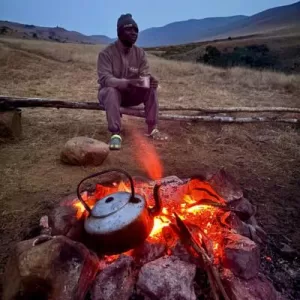
That night, we set up camp on the dry riverbed of the Limpopo River. Late in the season, the river appears dry, but the water still runs beneath the sand, and we dug deep into the riverbed to find fresh water for our evening’s supply. Setting up our tents with care, we ensured we were clear of the elephant paths that criss-cross the area, wary of the possibility of these giants wandering through camp in the night.

giant-baobab-in-pafuri

Day 2: Fever Trees and Giants (15.1 km)

The second day dawned even hotter than the first, and we made sure to fill our water bottles before heading off into the wilderness. Our path took us through a smaller fever tree forest, a mystical sight with their pale trunks glowing almost golden in the early morning light. There is something otherworldly about these trees, standing tall and silent against the landscape.

Mid-morning we reached the EcoTraining Camp, a welcome respite where we refilled our bottles and indulged in an ice-cold drink.

As we moved deeper into the bush, we spotted a herd of elephants moving gracefully through the forest. These moments, where nature allows us a glimpse into its secret world, are what make the Makuleke Concession so special. Our midday stop was at Hlangaluwe hill under the shade of a Nyala tree, offering some relief from the heat.

By the time we arrived at Dakamila, our second campsite along the Limpopo River, the sun had begun to set. This time, water was more easily accessible, and we enjoyed the luxury of a refreshing bucket shower before settling down for the night. A huge fire was burning in Zimbabwe, only a few hundred metres away – and we went to sleep with the orange flames lighting up the night’s sky.

setting-up-camp-in-the-limpopo-kruger-park

Day 3: Crooks and Legends (16 km)

The cooler weather on Day 3 came as a relief. After a quick cup of coffee, we started our hike through the baobab and jackelberry forests, passing through landscapes that felt almost timeless. Mid-morning brought us to Fernando’s Trading Post, a landmark that speaks to the wild past of this region, where adventurers, hunters, and ivory smugglers once traversed these lands.

The highlight of the day, however, was our arrival at Crooks’ Corner—a place where the borders of South Africa, Zimbabwe, and Mozambique meet. This triangular patch of land earned its name in the early 20th century when it served as a hideaway for smugglers and outlaws who slipped across borders to evade the law. When the Portuguese authorities were in pursuit of a suspect, the suspect would simply cross the river into South Africa and so it was if the South African authorities were chasing a suspect – they  would simply cross into Mozambique. Hence the name “Crook’s Corner”. It’s a strange and fascinating place, where the history of human ingenuity and survival mingles with the natural beauty of the landscape.

It is at Crook’s Corner that the SANPark’s Honorary Rangers Kruger Trail also begins – before winding its way 600km south.

By the time we reached our camp in the Nyala Tree Forest, the sun was low in the sky.

The Luvuvhu River meandered past our campsite only a small distance away. The Luvuvhu is a tributary of the famous Limpopo and responsible for a large part of the spectacular scenery in this area.

As we gathered around the campfire, Paul, our guide, shared stories of past trails, including one where a young leopard had calmly strolled past the camp, climbed a tree, and spent the night observing the group from above. We fell asleep that night with the sounds of the wilderness echoing around us – including a manly shriek from Paul for someone to please come and remove a rather nasty scorpion from his tent that had clearly hitched a ride in his backpack from some earlier stop in the day. (Jokes – there was no shrieking – Paul remained calm and collected at all times. No scorpions were harmed in the telling of this story!)

pafuri-makuleke-rest-stop

Day 4: Riverine Wonders and Animal Encounters (14.4km)

Day 4 led us along the Luvuvhu River floodplains, through the spectacular fever tree forest and graveyard, where the dead, ghostly-white trunks of fever trees stand starkly against the vibrant landscape. This particular forest is at the end of its lifecycle, as fever trees typically live for between 75 and 100 years. The forest’s decline is a natural part of its regeneration process, as the trees rely on seasonal flooding to soak and soften their seeds before they can germinate. Without regular floods, the younger trees struggle to establish, leaving behind the haunting remains of these once-thriving giants. Troops of baboons and a herd of zebra galloping through the golden light of the trees added to the surreal beauty of the scene.

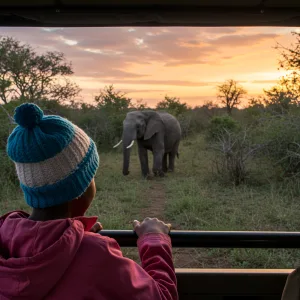
By mid-morning, we arrived at Nwambi Pan, where we shared the space with a pod of hippos. After lunch, we crossed the floodplains and entered the narrow sandstone and basalt ridges of Hutwini Gorge, which links the Luvuvhu and the Limpopo and is known as an “animal highway” where elephants, buffalo, and other creatures travel between the rivers. As we emerged from the gorge, a small herd of elephants greeted us, their trunks reaching up into the canopy as they fed on the vegetation.

We dropped our packs and silently crept closer. The curiosity and interest of both us and the elephants were palpable.

We camped that night near a bend in the Luvuvhu River called Mangala, where a group of elderly male buffalo, known as dagga boys, came down to drink as we watched from a safe distance. Mangala actually means ‘to report a crime’ and this is where the men of early days would gather and tell tales from their respective villages, catching up on the news. Fireflies and tents lit by torchlight under a sky full of stars, was the perfect way to end another unforgettable day.

pafuri-lanner-gorge

Day 5: Lanner Gorge and Rapids (8.3km)

The hike to Lanner Gorge on Day 5 was challenging but worth every step. As we reached the top of the gorge, we were rewarded with panoramic views of the Luvuvhu River winding its way through the sandstone cliffs carved over millions of years. The vantage point allowed us to take in the vastness of northern Kruger, the baobab-dominated sandveld stretching out below us.

Lanner Gorge was named by an early Kruger ranger because of the density of lanner falcons nesting in the cliffs of the area.

After lunch, we descended into the gorge, following a game path to the river where we had the privilege of a swim in the rapids. The water was refreshing, and we kept a cautious eye on the hippos and crocodiles that lurked downstream. That evening, we camped on a sandy beach beneath the cliffs, surrounded by the sounds of frogs, fireflies, and the hooting call of a Pel’s Fishing Owl – our own night time African symphony!

pafuri-hiking-in-lanner-gorge

Day 6: Walking the Luvuvhu (8.2 km)

Day 6 began with an unforgettable hike (although this really doesn’t capture how magnificent this experience was) through the river itself, wading through ankle-deep water as we followed its winding course. Crocodiles silently slipped into the water ahead of us, while the feather of a Pel’s Fishing Owl floated by, a reminder of the elusive beauty of this place. We were even fortunate enough to spot an African Clawless Otter sunning itself on the riverbank before disappearing into its den.

Shortly after midday, we arrived at Mashishiti Springs, eager for water and a break. As we dropped our bags around the spring, a bull elephant suddenly appeared. We beat a hasty, yet orderly, retreat to the safety of a nearby baobab tree, watching in silence as the elephant leisurely drank his fill, scratched his posterior along the banks of the spring, and made it clear who was in charge. His presence and proximity were both humbling and captivating.

Not long after, a small herd of females and young elephants approached the spring, but sensing that there had been unknown intruders nearby, they cautiously withdrew, waiting for the area to be safe. Once the bull finally moved on, we hurriedly collected water from the spring and relocated our packs to the rocky outcrop above. From this vantage point, we set up camp and watched as the herd returned, now free to enjoy the water in peace, creating a perfect moment to observe these magnificent creatures in their natural rhythm.

Our final night entailed the treat of a primitive sleep out under the stars. Each person took a turn to take watch as the night was filled with the whoops of hyena – and the gentle(ish) snores of the rest of us.

luvuvhu-campsite-by-torchlight

Day 7: The Home Stretch (1.2km)

Our final morning on the trail was a slow and reflective one. We hiked for an hour or so before meeting vehicles from The Outpost that would ferry us back to the lodge. As we sipped cold drinks and retraced our steps on the map, the magnitude of the adventure sank in. This trail through the Makuleke Concession had not only brought us closer to nature but had connected us to the ancient history and untamed beauty of this unique corner of South Africa.

As we headed home, sore-footed but with full hearts, the memories of this trail, from its giant baobabs to the quiet moments under the stars, would stay with us forever.

Get ready to be inspired—watch this epic video and experience the hike like never before!

Start your adventure — contact PAW Safaris today!

To tailor-make your own adventure, contact Paul via phone, Whatsapp or email!

You can choose to hike in Makuleke for 4, 5 or 6 nights and Paul can discuss various options to suit you and your party.

Website: https://pawsafaris.com/

Tel: +27 79 631 5900

Email: paul@pawsafaris.com

A huge thank you to PAW Safaris and Keagan Osler for guiding us, the Outpost for use of walking rights, and Arian Ourtev and Michele Torlutter for such stunning videos and photographs. 

trailfood-co-cook-in-bag-beef-potjie-multi-day-hike
FUEL FOR YOUR ADVENTURES
I'm ready to hike
All our hiking meals are healthy, lightweight, and convenient. 
We’ve done all the planning so that you can simply hike!
Ultimate Hiking Guides
Adventure Insights
Featured Products