eSwatini’s Malolotja

Are you ready to embark on an adventure through one of Southern Africa’s most spectacular mountain reserves?
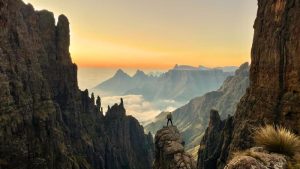
The Malolotja Nature Reserve in eSwatini offers a variety of hiking experiences that will take you through rugged landscapes, deep valleys, and pristine rivers.
This guide will provide you with everything you need to know to prepare for a hike through this stunning reserve.
The Ultimate Guide to Hiking in Malolotja
Why Should You Choose to Hike in Malolotja Nature Reserve?
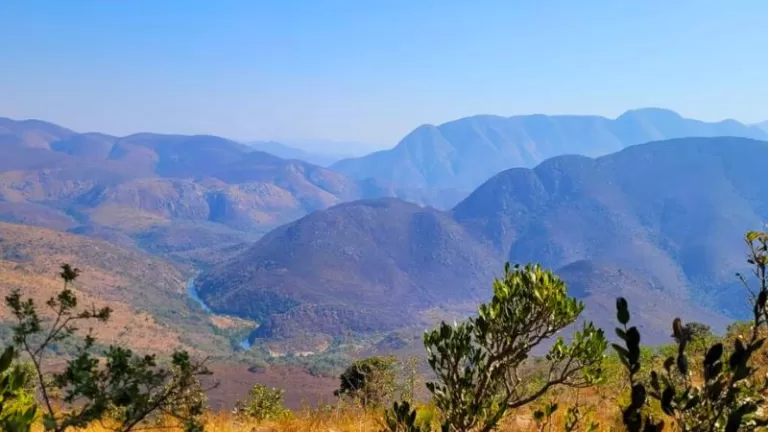
Malolotja Nature Reserve extends over an area of 18 000 hectares in north-west eSwatini, making it the largest proclaimed protected area in the Kingdom, boasting approximately 200kms of hiking trails that traverse a variety of diverse ecosystems, including montane grasslands, mist belt forests, and ancient geological formations. Whether you’re a keen birder, a geology enthusiast, or simply someone who enjoys the solitude of nature, Malolotja offers something for everyone.
And did you know that Malolotja is one of the highest reserves in Southern Africa when altitude is taken into consideration?! Plus eSwatini is home to one of the oldest monarchies in Africa!
There are both self-carry and slack-pack options available, making it ideal for those who want the physically challenging experience of carrying their own gear, as well as for those who prefer to explore off-the-beaten-path places without the burden of a full backpack. Whether you’re after a hardcore hiking challenge or a more leisurely adventure, Malolotja caters to all.
Who Would Enjoy Hiking in Malolotja?
Malolotja is a great place for all sorts of hikers.
With very reasonably priced accommodation in the reserve itself, a multitude of hikes ranging from day hikes to multi-day hikes AND the canopy tour, Malolotja offers something for everyone.
I’m particularly keen to take my sons on the Komati Gorge hike so I think it’s a great option for families as well as friends and hiking groups.
Things to Look out for in Malolotja
The birdlife in Malolotja Nature Reserve is rich and diverse, featuring a remarkable array of both vulnerable and rare species such as
- The Blue Swallow with its long tail streamers – although recent data indicate that populations are declining due to regional habitat degradation,
- The Southern Bald Ibis which is endemic to Southern Africa,
- The notoriously secretive Striped Flufftail (and with a name like that who doesn’t want to see one?!),
- The even rarer Blackrumped Buttonquail,
- The Stanley or Denham Bustard – which is one of the larger bustards in Southern Africa,
- And the Ground Woodpecker – endemic to Southern Africa and one of only 3 ground-dwelling woodpeckers in the world!
The reserve is also home to a variety of fascinating mammals, including elusive otters, brown hyenas, aardvarks, and aardwolves, offering wildlife enthusiasts the chance to see some of the region’s more unusual species. We saw ample traces of brown hyena on the trail and recently one of the guides from All Out Africa saw a leopard and her cub.
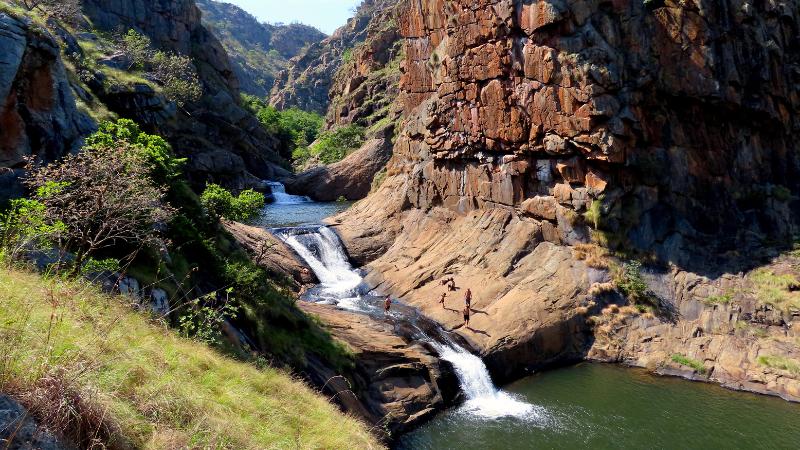
Additionally, the reserve boasts historical and natural landmarks, such as the Ngwenya Mine, considered to be one, if not the, oldest mines in the world, and Eswatini’s highest waterfall – Malolotja Falls – dropping over 90 metres!
When To Hike in Malolotja
All Out Africa offer this hike all year round.
The summer months (September through April) offer fabulous temperatures for swimming, the days are typically hot, the nights cooler and there may be the chance of rain.
In winter (May through August) the days are still warm but the nights a lot cooler. Less chance of rain and potentially more chances to see animals.
If I had to choose my top period to hike in Malolotja, I would suggest the cooler months, from April to September. During this period, the weather is more temperate, and there’s less chance of heavy rain, which can make trails slippery and river crossings challenging.
However, be prepared for cold nights, especially in winter, when temperatures can drop significantly.
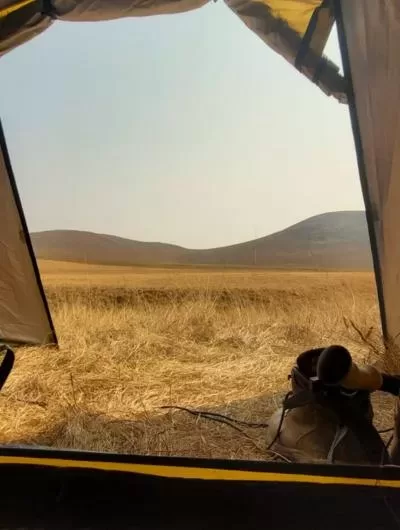
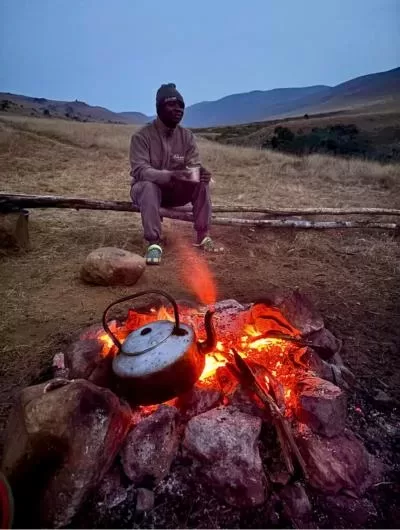
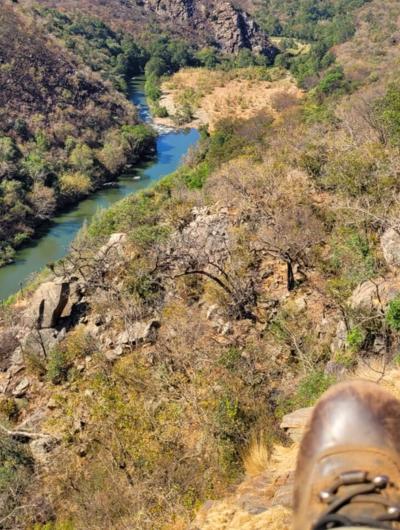
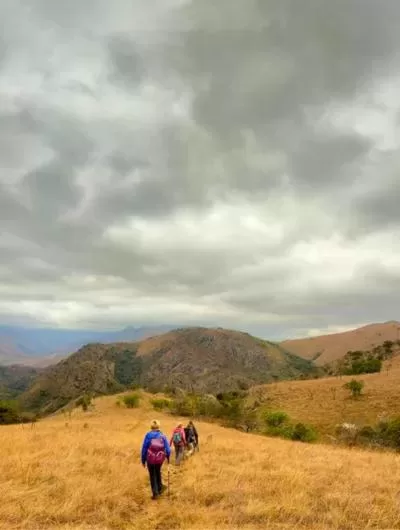
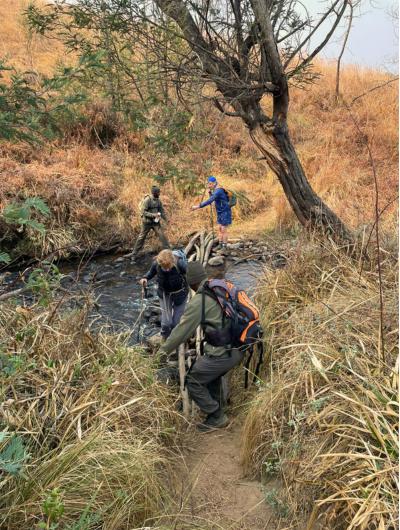
All About Hiking in the Malolotja Nature Reserve
As mentioned, Malolotja National Reserve contains around 200 km of trails with 18 different campsites. This means that there are a multitude of route options available.
This guide will focus on the 3-night Komati Gorge Route, although there are many other hikes available.
Approximately 25 – 34 km over 3 days
Moderate to difficult
A fairly good level of fitness is required due to the mountainous terrain.
Suitable for adults and teenagers with prior hiking experience.
All Out Africa are reasonably flexible with the number of people that they will take hiking. So it’s definitely worth getting in touch with them to see how they can accommodate you.
- Backpacking
- Minimum 3 hikers, maximum 18 hikers
- R4999 per person sharing a tent
- Minimum hiking age is 15 years for the backpack option
- Slackpacking
- Minimum 3 hikers, maximum 18 hikers
- Rates start at R14031 per person sharing and decrease to R5880 per person sharing (Contact All Out Africa for the specific rates based on number of people)
- Minimum hiking age is 12 years for the slackpack option
- 1 child under 12, accompanying 2 adults receives a 10% discount
On the self-carry hike, you will need to pack all your essentials, including your tent, sleeping bag, cooking gear, and food. Aim to keep your backpack weight between ¼ and 1/3rd of your total body weight, depending on your fitness level and experience.
Unless you know the park and its trails really well I would highly recommend taking a guide with you. The guides from All Out Africa are knowledgeable, well-trained and a great asset to the hike.
The slackpacking option can also be arranged through All Out Africa and is a super, reasonably easy way to still get out to places cars can’t go!
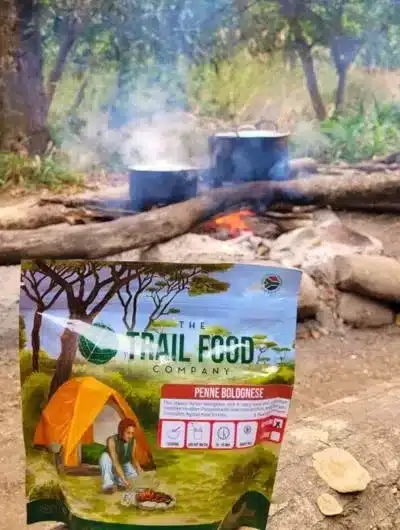
You will be camping at designated wild campsites along the trail. These sites offer almost no facilities, so you must be prepared for basic living conditions.
Expect to pitch your tent on rugged terrain and use a portable stove for cooking, although fires have been made in some of the campsites.
Water is available from streams and rivers along the route, with the Malolotja Mountains serving as the primary source for these waters, making it generally safe to drink.
It may however be advisable to carry water purification tablets or drops, especially if you have a sensitive stomach.
There are no formal facilities on the trail. You will need to dig a hole for toilet use and carry out all your rubbish.
The exception is campsite 12 (Lower Potholes) which has a pit toilet.
Take cash for park entry fees – unless included with your hiking operator.

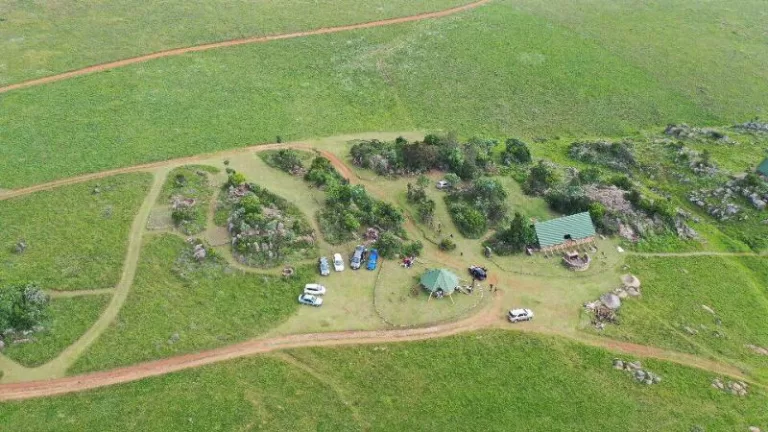
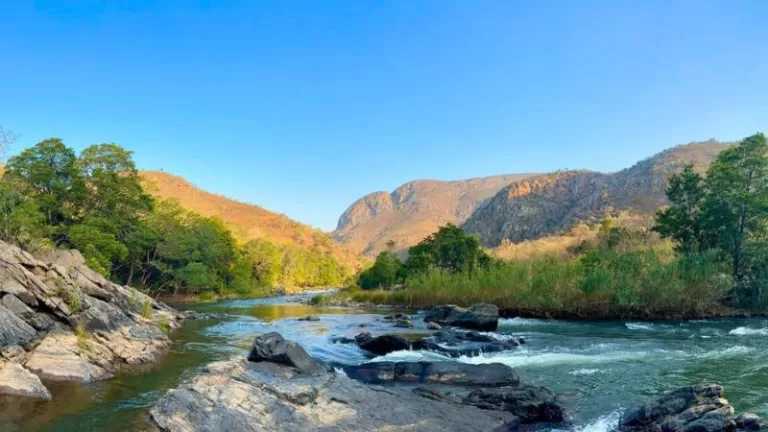
The 3-night Komati Gorge Route
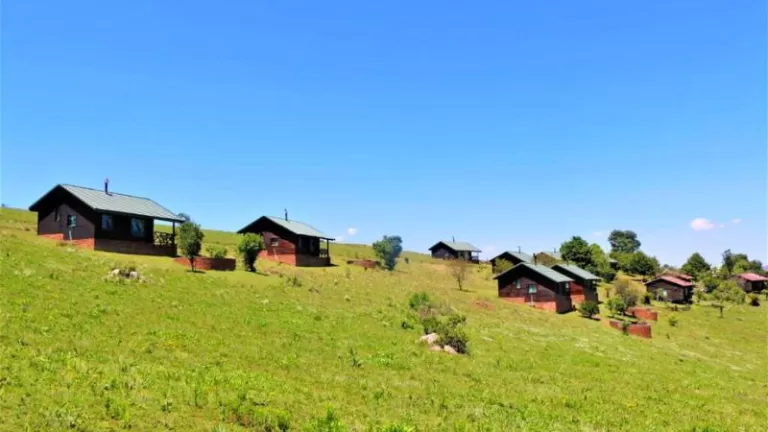
Vehicles are left at the Malolotja Canopy Tours parking (the same location as the Malolotja cabins).
Day 1: Malolotja Reception to Mhlangamphepha Falls (7 – 11 km)
- Meet your Guides (and Porters if you’re slack-packing) at the Malolotja reception and hand over your bags which they will put in their backpacks. The Lead Guide will give a short briefing on the plan for the next few days.
- Depending on the option you have chosen you can either start walking from the reception or hop into a 4×4 vehicle for a short transfer to the Ngwenya Viewpoint where you start hiking.
- Distances:
- Full distance self-carry: Reception to Mhlangamphepha Campsite 2: +-11km
- Ngwenya View Point to Mhlangamphepha Campsite: 7km
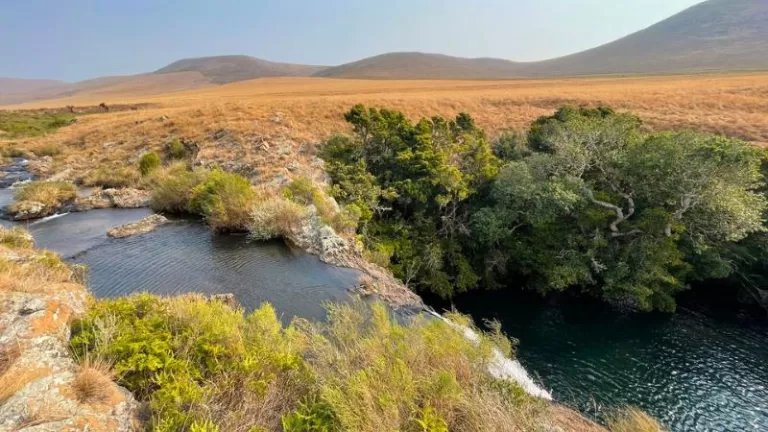
- Once you start descending into the Mhlangamphepha Valley keep an eye out for herds of zebra, black wildebeest, eland, blesbok and hartebeest! From here the trail winds down into the valley before arriving at the small but beautifully located Mhlangamphepha Falls where you will camp for the night.
- A swim in the beautiful rock pool just below camp is HIGHLY recommended!
- And if you aren’t tired yet, it’s worth hiking up to the edge of the far ridge to peer down into South Africa.
Mhlangamphepha Camp is a wild campsite, set at a beautiful open location on the edge of the Mhlangamphepha watercourse. Please be aware there is no shade, no toilet or ablution facilities, and no electricity.
Day 2: Mhlangamphepha Falls to Lower Potholes (+-10km)
- Depart Mhlangamphepha Camp and walk northwards up the beautiful Mhlangamphepha Valley with amazing views into Songimvelo Game Reserve in South Africa.
- Pass the distant but visible Siweni Falls and skirt around the western side of Siloftwane Peak before the long descent into the Malolotja Valley along the Yingayingeni watercourse.
- Arrive at the fabulous Lower Potholes Campsite
- Spend the rest of the day enjoying the amazingly beautiful Lower Potholes, swimming in the large crystal clear pool, sunbathing on the rocks and keeping a sharp eye out for nesting bald ibisis (ibisie? ibisey?)
The Lower Potholes campsite is a beautiful, shaded, wild campsite set at an amazing location right at the Lower Potholes. There are no facilities except for a basic pit latrine toilet.
Day 3: Lower Potholes to Komati River Campsite (4 – 5 km)
- Depart the Lower Potholes (hopefully after a quick early morning dip and or some otter spotting!)
- Walk downstream along the Malolotja River before reaching the Komati River
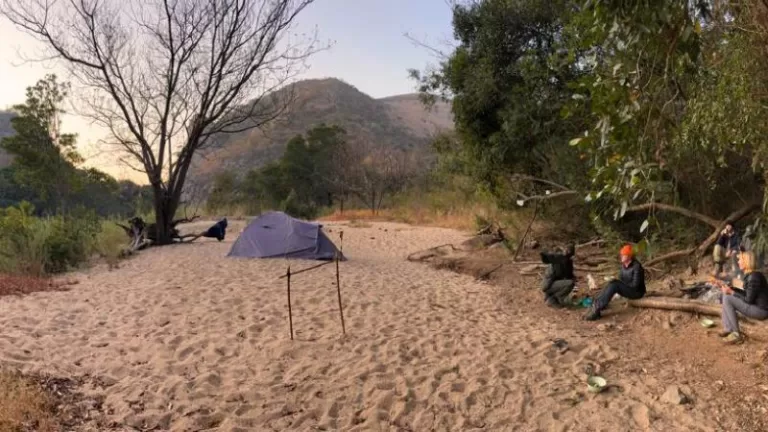
- Follow the Komati river downstream to Campsite 16 which is set on a stunning sandy ‘beach’.
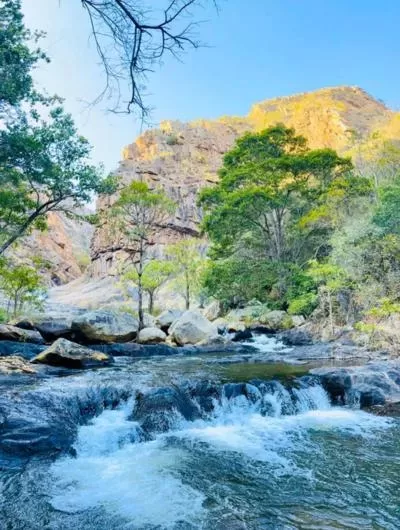
- Explore the rugged and beautiful Komati Gorge as you follow the river downstream.
- There are also impressive views of the magnificent Mgwayiza Range to the north.
- This is a short day in terms of distance – between 4 and 5 km but there are a number of river crossings that need to be taken into account. Some of them can be hopped over on rocks, others will need you to remove your shoes and socks altogether.
- Please note that the number and depth of crossings will vary depending on the time of year you visit and the previous season’s rainfall.
Camp 16 facilities: Beautiful, shaded, wild campsite set on the sand banks of the Komati River.
Day 4: Komati River Campsite to Nkomati View Point and Malolotja Reception (4 – 12km)
- Depart the Komati River campsite and hike up and out of the Komati Valley to the Nkomati View Point (all ascent).
- If you have chosen the slackpack or transfer option then you will be met by a vehicle for a scenic transfer back to the Malolotja Reception.
- This option is approximately 4km. It is a steep hike but offers spectacular views when you stop at Campsite 16 for a well-deserved tea break.
- If you have chosen to hike all the way back to the Reception then the distance is about an additional 8km.
- The route on this day enjoys views over the Komati Gorge to the north and Maguga Dam to the east.
Costs for Hiking in Malolotja
The costs to go hiking in Malolotja are very dependent on which option you choose.
The Malolotja Park entry fee is R50 for children and R70 for adults (Note that the Lilangeni is equivalent to the South African Rand).
All Out Africa’s rates depend on the following below so it is best to contact them directly for more information.
- Backpack vs Slackpack (latter is more expensive)
- The number of people in the group (More people generally means cheaper)
- Whether the hike dates are being specified by All Out Africa, or whether you are requesting your ‘own’ hike over certain specified dates
Accommodation before and after the hike
There are some very good accommodation options at Malolotja Nature Reserve.
Self-catering Chalets
Malolotja offers 8 self-catering cabins, fully equipped, including bedding and towels. They accommodate five people each (two bedrooms, one with a single and a bunk bed). The cabins each have an outdoor area set up for braais.
The current cost as of 2025 is R400 per person per night.
There is also a small restaurant and bar near the chalets which operates from 8am to 6pm.
Campsites:
The main campsite at Malolotja is situated near the main entrance, tucked into rock outcrops in a rocky ridge running through open grassland. The campsite includes 15 sites each with braai facilities, plus a communal braai area for larger groups and an ablution block including baths and showers, with hot water provided. The sites are of varying sizes, some more appropriate for larger groups.
Current Cost as of 2025 is R200 per person per night but this can vary depending on age and whether you are a local or international visitor.
Malolotja Environmental Educational Center:
The MEEC as it is referred to is ideal for large groups (Please contact Malolotja directly for pricing).
Costs for bunk bed in the MEEC, as of 2025, is R150 per person per night.
All bookings for the above 3 options can be made by contacting Malolotja Nature Reserve on malolotja.info@entc.org.sz or +268 7806 8934
Accommodation outside the Park:
Coming from Jeppes Reef we stayed at Phoponyane Falls EcoLodge which is about 50 minutes from Malolotja.
This is a super, albeit costlier option, for accommodation.
Phoponyane offers 11 varying accommodation options, from cottages to beehive huts to luxury tents.
There are some great short walks on the property with some fabulous birding opportunities (we had multiple sightings of narina trogons) and they have a wicked natural swimming pool which you should definitely make time for!
There is a small restaurant onsite which offers good food although the service was a bit chaotic – don’t be in a rush!
How To Book To Hike Malolotja
All Out Africa is our recommended company for arranging hikes in eSwatini.
Email: tours@alloutafrica.com
Tel: +268 7835 2572
Office hours:
Monday – Saturday 08h00 – 17h00
Sunday 08:30 – 16:30
Southern African time (GMT +2)
Alternatively, if you want to book with Malolotja Nature Reserve directly, they can be contacted at malolotjares@gmail.com or malolotja.info@entc.org.sz, or +268 7990 6845 or +268 7806 8934.
Getting To eSwatini and Malolotja National Park
Below are some of the options for driving into eSwatini. We drove through Jeppe’s Reef and the border crossing was quick, efficient and friendly – even on a Friday at the end of the month!
We generally found the roads in eSwatini to be in good condition, but I would strongly suggest that you do not drive after dark. The roads are not well lit, if at all, winding and relatively mountainous.
Depending on where you’re coming from aim to get to your destination before dark.
From Johannesburg/Pretoria
If you’re driving from Johannesburg or Pretoria to Malolotja Nature Reserve in eSwatini, the best border post to cross is the Oshoek/Ngwenya Border Post. This is the most direct and convenient crossing for travellers from Johannesburg, and is the main border post between South Africa and eSwatini.
- Proximity to Malolotja: The Oshoek/Ngwenya Border Post is only about 30 km from the Malolotja Nature Reserve, making it the closest border crossing to your destination.
- Operating Hours: 7:00 AM to midnight
From Hoedspruit/Nelspruit
If you’re coming from further North – like Hoedspruit, or flying into KMIA – then use the Jeppe’s Reef/ Onverwacht Border Post
Once you cross the border at Jeppes Reef, you can take the MR1 road south towards Piggs Peak, which will then lead you towards Malolotja Nature Reserve. This route provides a scenic drive through eSwatini’s northern region.
- Proximity to Malolotja: Approximately 74km which will take in the region of 1 hour 15 minutes
- Operating Hours: 7:00 AM to 8:00 PM.
From Durban/KZN
The best border post to cross at is the Golela Border Post.
- Proximity to Malolotja: 204km with close to 3hours of driving time (without stops)
- Operating Hours: 7:00 AM to 10:00 PM
How To Reach The Starting Point For The Malolotja Trail
The trail starts at the Malolotja Canopy Tours reception, which can be found by searching “Malolotja Nature Reserve Log Cabins” on Google Maps.
GPS coordinates are approximately -26.1764, 31.1747
The reserve is accessible by road, with ample parking available at the reception area.
We had no issues leaving our vehicle parked there for the 3 nights we were hiking.
What To Pack when Hiking in Malolotja
If you are planning on the slack-pack option then All Out Africa will provide you with clear details of what they provide and what you need to bring.
Essentially you will need a sleeping bag (which will be carried for you), your clothes, personal items, water and snacks.
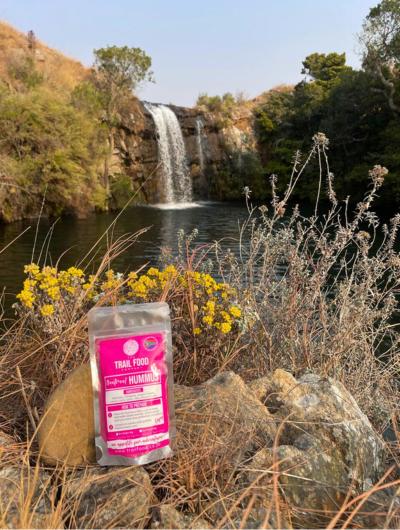
If you are doing a self-carry hike then take a look at Trail Food’s handy article on what to pack.
How To Pack for your Hike
If you need some ideas on how to pack your backpack, take a look at our handy article!
FAQS
Here are answers to a few questions that you might still have about hiking in Malolotja Nature Reserve.
Is the Malolotja Trail suitable for beginners?
Although Malolotja offers a variety of hikes, the Komati Gorge Route is better suited to reasonably experienced hikers due to some of the terrain that you need to cover. However, there are also a number of shorter day hikes that are available.
Can I drink the water from streams?
We drank the water without filtering it but at the end of the day it’s a decision that you need to make.
What wildlife might I see?
Expect to see a variety of antelope, zebras, and possibly baboons. There are some exciting nocturnal animals around but you need to be really lucky to see these!
Final Thoughts
Living in Hoedspruit and so close to eSwatini I was shocked that Malolotja Nature Reserve and the incredible hiking there wasn’t more widely known.
As mentioned, the drive there is relatively easy, the border crossings were quick, accommodation super and the hike beautiful – what more could you ask for?!
A big thank you to Andrew Hishin, Jenny Hishin, Harriet Nimmo, ENTC and All Out Africa for photographs.
If you have an epic hike or trail to share, or if there are any corrections or updates that you would like to suggest to this trail guide, please email

FUEL FOR YOUR ADVENTURES
I'm ready to hike
All our hiking meals are healthy, lightweight, and convenient.
We’ve done all the planning so that you can simply hike!
Ultimate Hiking Guides


Adventure Insights


Featured Products
-
 Main Meals
North African Couscous with Lamb
R75.00 – R170.00Price range: R75.00 through R170.00 Select options This product has multiple variants. The options may be chosen on the product page -
 Main Meals
Hiker’s Bobotie
R75.00 – R165.00Price range: R75.00 through R165.00 Select options This product has multiple variants. The options may be chosen on the product page -

-